William Greaves’s extraordinary documentary brings the Harlem Renaissance to life and raises a question about the artists, communities, and conversations shaping our future.
Once you get to a certain age, you begin to realize that knowledge of self, and studying the giants whose shoulders you stand on, is a lifelong journey of being a student.
Take the Harlem Renaissance, for example. You can spend years reading books, visiting museums, studying photographs, looking at paintings, and immersing yourself in the history, and there will always be more to learn. More objects to admire. More people to discover. More stories to uncover. More dots to connect.
I’ve been a student of the Harlem Renaissance for most of my life, sometimes without even realizing it.
I went to elementary school at P.S. 140, the Edward K. “Duke” Ellington School, in the ’80s. And in that school, I remember being introduced to Langston Hughes. I couldn’t tell you what grade I was in, but I remember our class having to learn his poem “Mother to Son.” It was always a hit at assemblies. Two kids onstage, one a boy sulking in a chair at center stage and a little girl wailing the poem at him while the crowd gasps, remarks, and makes church noises. Wagging her finger, trying real hard not to roll her eyes, she lands the piece with, “And life for me ain’t been no crystal stair.” Applause. She sassy-walks offstage, and the curtain closes with the boy still staring at his Hush Puppies. Hughes was one of the writers whose words stayed with me.
Looking back, that was one of the first seeds of the Harlem Renaissance planted in my life. And somewhere along the way, with everything else life throws at you, I had forgotten about that early experience.
Until I watched Once Upon a Time in Harlem.
On October 14, 2026, I attended a special screening of the documentary at the Studio Museum in Harlem. Presented by NEON and hosted by Dapper Dan, the evening brought the film back to the very neighborhood where much of its history unfolded.
Sitting there, watching these extraordinary people interact with one another, I found myself reflecting on just how long I had been learning from them.
And how much I still had to learn.
A Village of Knowledge
A few years ago, I attended the Metropolitan Museum of Art’s exhibition The Harlem Renaissance and Transatlantic Modernism. It was a beautiful exhibition, and one that gave me another opportunity to understand the depth and reach of this cultural movement.
There I was, standing in front of work by Augusta Savage, studying photographs by James Van Der Zee, reading wall texts, and discovering the connections between these artists and their European contemporaries, including Matisse and Picasso.
And the education continued long after I left the galleries.
There were books, podcasts, exhibition videos, guided tours, photography, paintings, and enough related material to keep me occupied for quite some time. These resources allowed me to revisit ideas, examine relationships, and build upon what I’d experienced inside the museum.
That’s when I began thinking about the village.
Because when you’re trying to understand something as vast as the Harlem Renaissance, it takes a village. And that village extends well beyond the people who participated in the movement.
It includes the institutions preserving their work, the historians researching their lives, the photographers documenting their existence, and the writers making their stories available to another generation.
It includes places like the Met, the Schomburg Center, and the Studio Museum in Harlem. It includes novels like Nella Larsen’s Passing, Claude McKay’s Home to Harlem, and Zora Neale Hurston’s Their Eyes Were Watching God.
And sometimes, the village reveals itself simply because you happen to be somewhere.
In the early 2000s, I was living in Orlando, Florida, and working about a block outside Eatonville, the historic town associated with Zora Neale Hurston.
My proximity to Eatonville introduced me to another dimension of Hurston’s life. I attended the annual Zora Neale Hurston Festival, walked through the community, spoke with people, looked at the art, read the historical information, and experienced the culture of the place itself.
There was food, music, art, and a wonderful sense of community. One year, Isaac Hayes was the headlining performer.
Imagine that. I’m in Eatonville, Florida, listening to Isaac Hayes, enjoying myself, eating good food, and unknowingly continuing my education about the Harlem Renaissance.
The Harlem Renaissance, in Their Own Voices
And then a film like Once Upon a Time in Harlem comes along and gives you something remarkable.
You get to hear the people you’ve spent years learning about speak for themselves.
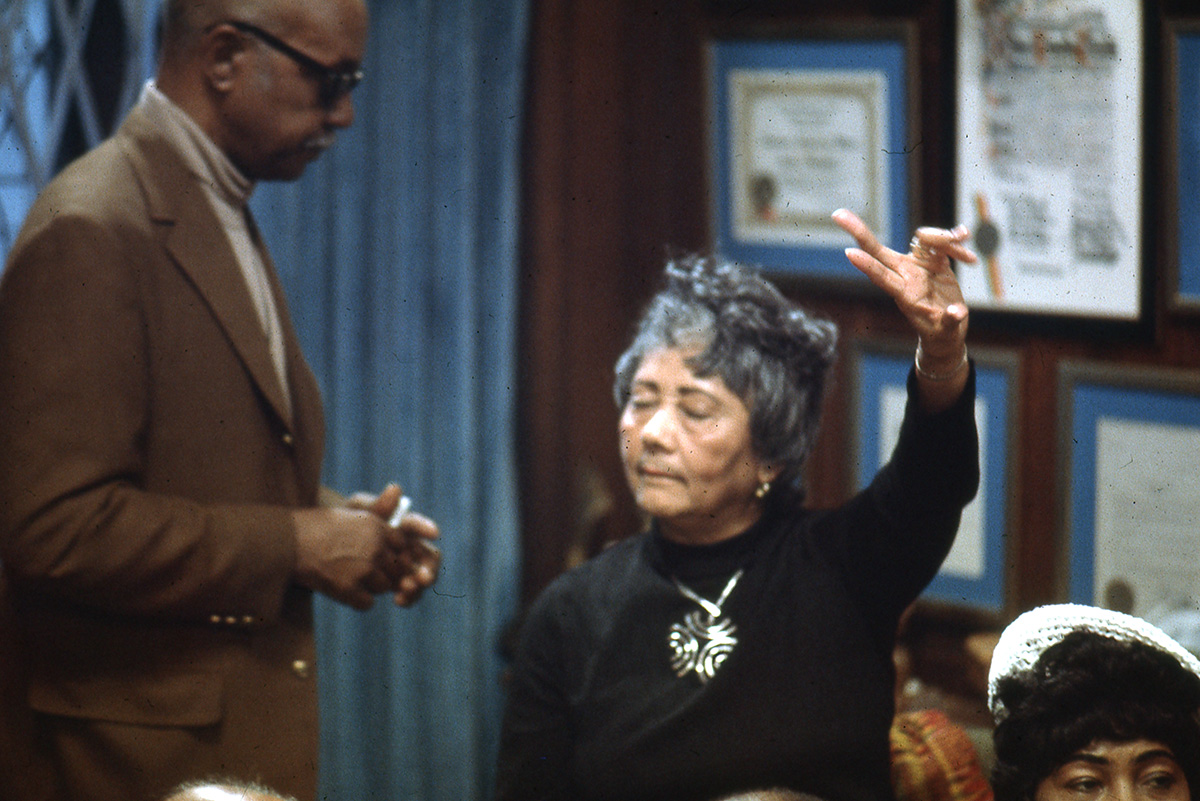
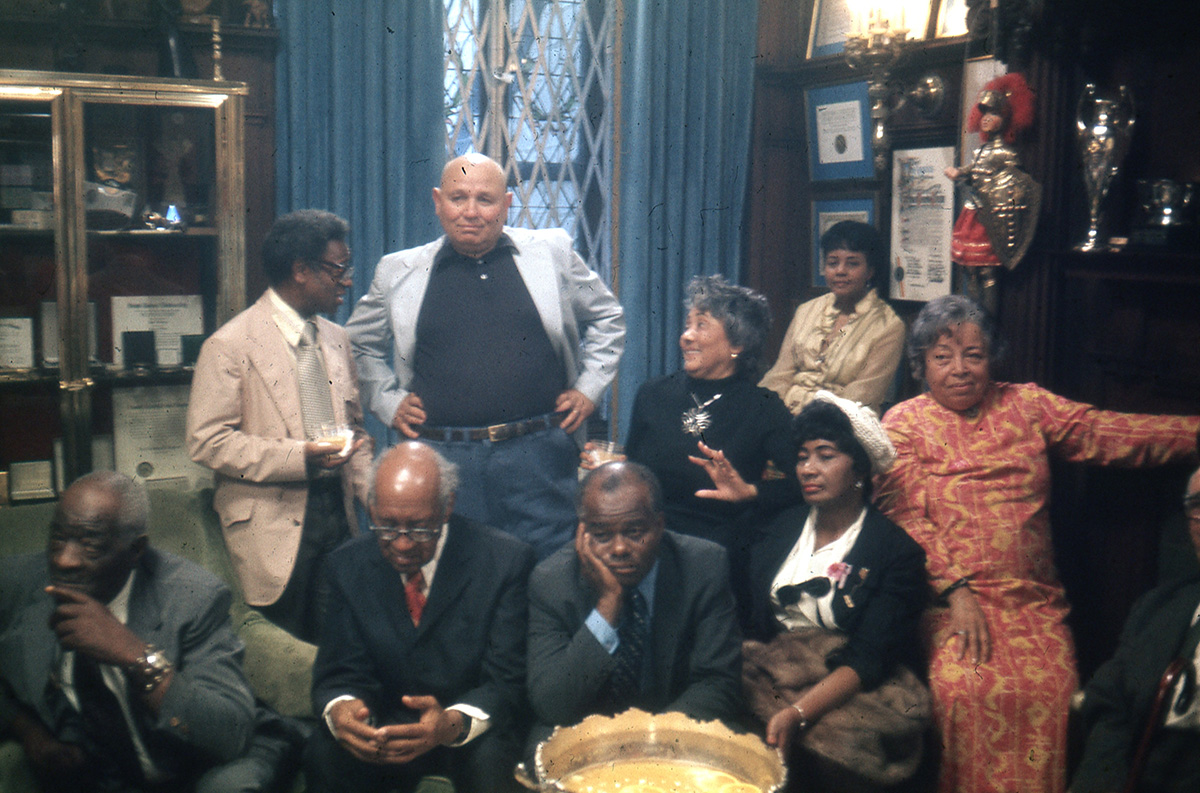
In August 1972, pioneering filmmaker William Greaves assembled an extraordinary gathering of surviving Harlem Renaissance figures at Duke Ellington’s townhouse in Harlem.
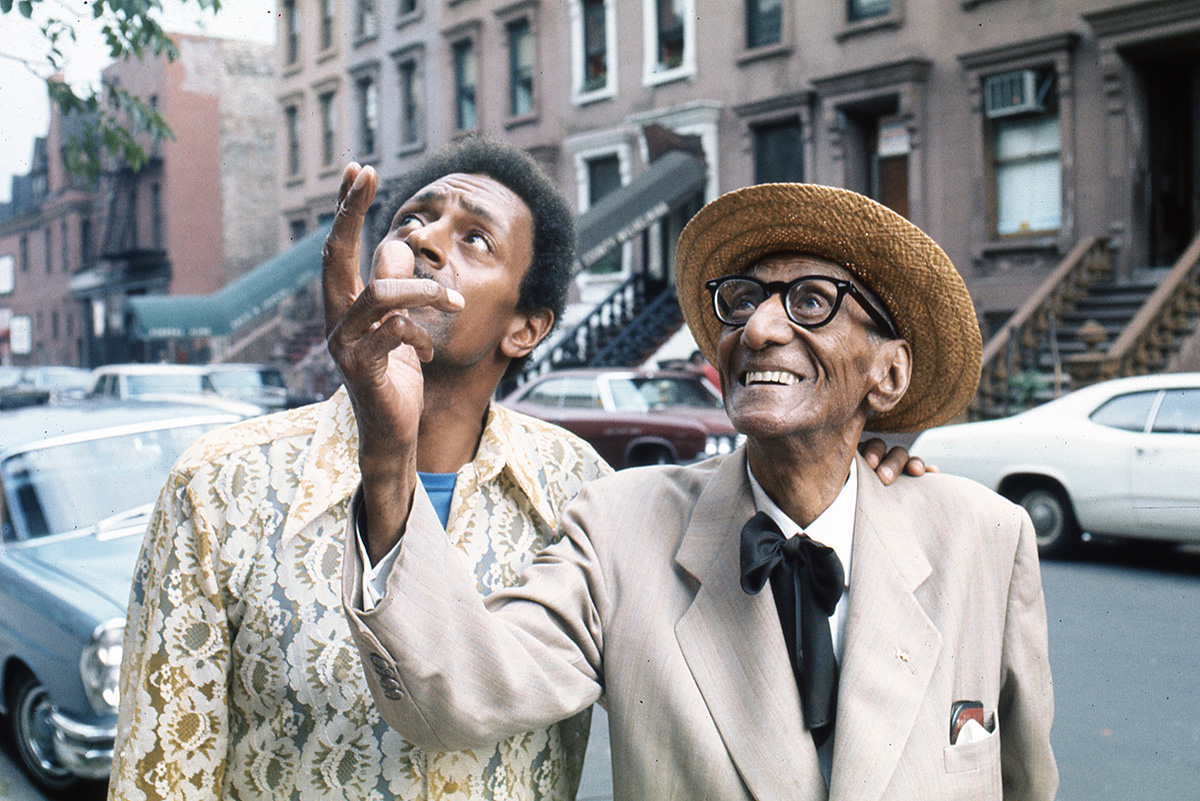
Among the guests were photographer James Van Der Zee, artists Aaron Douglas and Romare Bearden, poet Arna Bontemps, composer Eubie Blake, writer Richard Bruce Nugent, journalist Gerri Major, and actor Leigh Whipper.
Greaves brought together more than two dozen artists, intellectuals, writers, performers, and cultural figures to reflect on the movement they had helped shape decades earlier.
He filmed them on 16mm, recording their conversations, personalities, recollections, and disagreements.
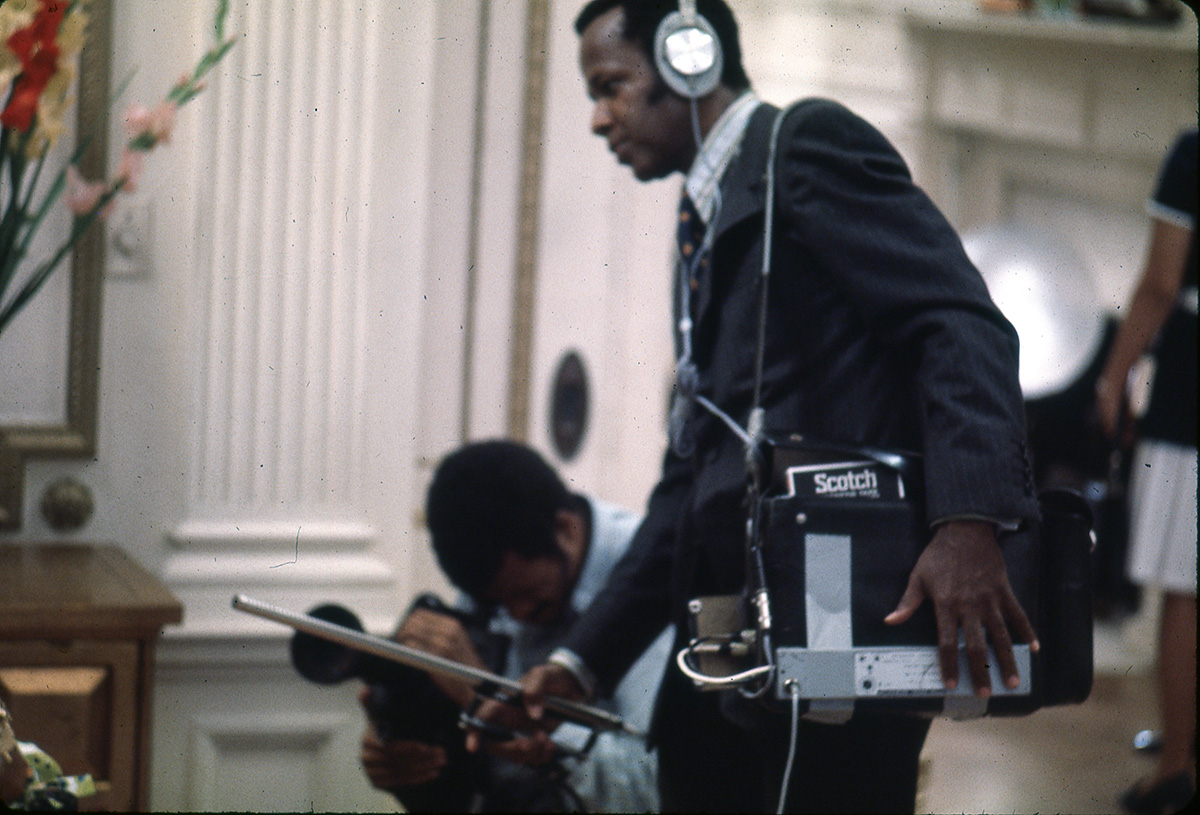
For more than 50 years, this material remained largely unseen by the public. Greaves worked on the project intermittently throughout his life, but died in 2014 before completing it. His son David, who had operated one of the cameras during the original gathering, eventually directed the finished documentary, supported by his daughter Liani Greaves and a team of dedicated collaborators.
The resulting 100-minute film is extraordinary.
There’s James Van Der Zee, a man whose photographs helped define how generations would see Harlem, sitting at Duke Ellington’s piano and playing a little music. He mentions that he hasn’t touched a piano in several years, then proceeds to play the most beautiful riff.
There’s a recollection of visiting Augusta Savage’s basement studio, a space that might have appeared ordinary from the outside but contained an entire world of artistic possibility for a young visitor.
There are stories about Zora Neale Hurston, Marcus Garvey, Langston Hughes, and countless others whose names have become fixtures in our understanding of American cultural history.
The Art of Disagreement
But what fascinated me most were the exchanges between the people who were actually there.
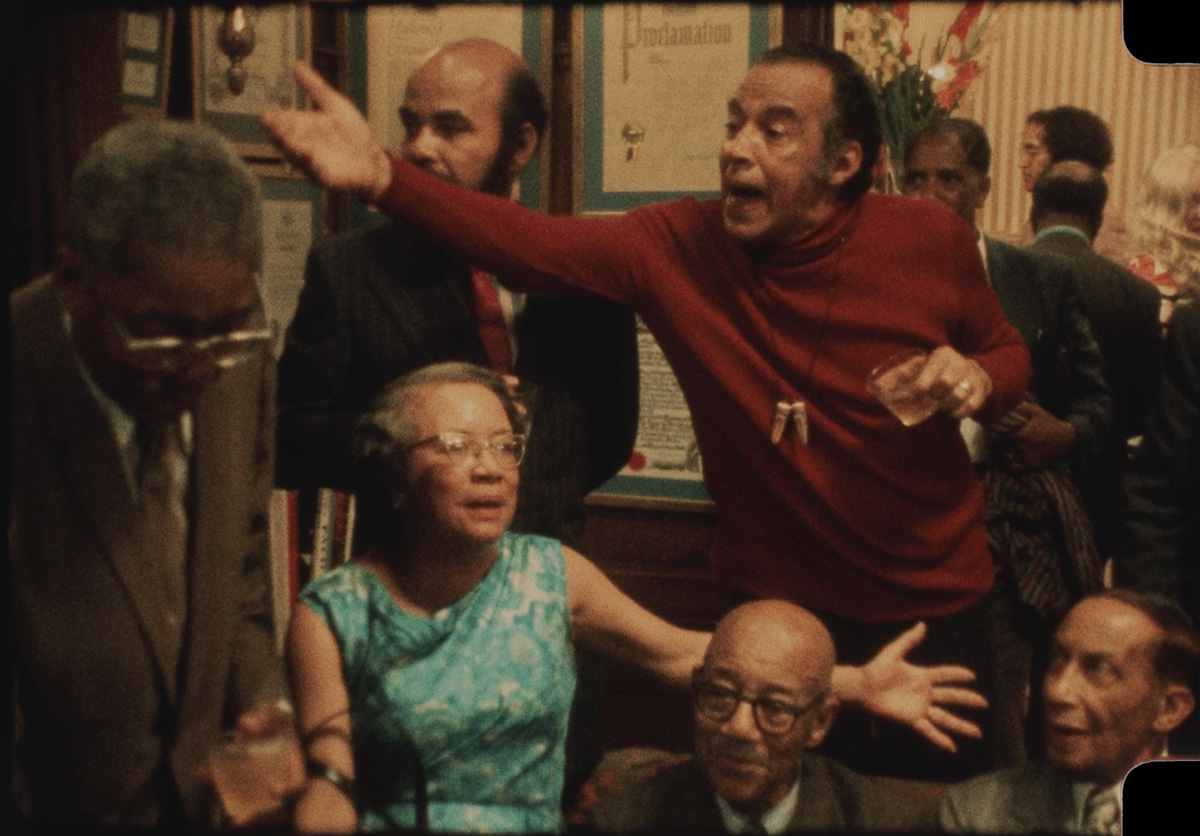
They interrupt each other. They correct one another. They debate politics, race, artistic identity, and who deserves recognition. They challenge each other’s interpretations of events they experienced firsthand.
At one point, the conversation turns to Marcus Garvey and the political philosophies surrounding Black liberation. Elsewhere, they debate the relationship between racial identity and artistic expression. There are disagreements over the significance of particular individuals and organizations, and pointed reminders about the contributions of women whose names deserve greater recognition.
You can almost feel the room getting heated.
And I loved that.
These are people whose work has influenced generations, including my own, and here they are revealing their personalities, their convictions, their humor, and, occasionally, their pettiness. And hey, I’m not even mad at that. It humanized them.
The restored footage has a warmth and immediacy that makes these encounters feel surprisingly close. The cameras move among the guests while conversations develop, overlap, and occasionally compete for attention. The filmmaking allows the gathering to unfold with all the unpredictability of people sharing a room.
And watching them, I kept returning to one thought.
Even in a disagreement, it’s a collaboration.
The conversations weren’t always comfortable. Everybody didn’t get along. Some disagreements remained unresolved. Yet these people continued engaging with one another, exchanging ideas, and contributing to a larger cultural movement.
They were all working toward something, even when their methods and philosophies differed.
And that needle they were moving?
It’s still moving.
I am receiving the benefits of their existence, their work, their relationships, and the decisions they made long before I was born.
The documentary makes those relationships visible in a way that a photograph or a written biography can only begin to approach.
Keeping the Film Alive
And the story of the film’s completion is another example of that same commitment to collaboration and preservation.
William Greaves spent decades trying to bring the project to fruition. His wife and longtime creative partner, Louise Archambault Greaves, continued protecting and advancing the work after his death. She remained dedicated to the film until her own passing in 2023.
David Greaves, Liani Greaves, producer and editor Anne de Mare, editor Lynn True, and their collaborators ultimately brought the footage to a new generation.
The film itself became a multigenerational creative undertaking.
The Village Around Me
Following the screening, Bevy Smith moderated a conversation with David Greaves, Liani Greaves, and Anne de Mare.
The discussion was brief, but the questions were thoughtful, particularly the last one.
Bevy asked each panelist what a modern-day artist could learn from the Harlem Renaissance.
David spoke about the importance of collaborating across disciplines.
Liani spoke about being present with one another and understanding that the work we are doing today is actively shaping the future.
“We are right now creating the future,” she said.
Anne reflected on William Greaves’s philosophy of creativity and the idea that our ability to make things is one of the great rewards of being human.
I appreciated all three answers.
And I was thinking about them again during the reception that followed.
I was standing with my friend Stephen of McFadden Creative, someone I’ve known since childhood, when we met in Hattiesburg, Mississippi.
Over the years, Stephen has been one of my biggest creative influences. We’ve collaborated, exchanged ideas, watched each other develop professionally, and seen projects move from conversations into actual work.
There we were, inside the Studio Museum in Harlem, holding court over vino and veggie patties after watching a film about artists who had spent years doing essentially the same thing.
Talking. Sharing ideas. Challenging one another. Building relationships.
And then Bevy Smith came walking through our little cipher.
She stopped to chat, and I thanked her for asking that final question during the panel because I genuinely appreciated what each person had to say.
She laughed and told us, “They told me I had three questions, but I had a fourth.”
That’s Bevy.
And as I stood there, I realized that the village I had been thinking about throughout the evening was all around me.
I was watching the film in a room filled with some of the sharpest Black minds in New York. I was sitting beside someone whose work and friendship had helped shape my own creative life. And I was having conversations in the same neighborhood where, a century earlier, artists and intellectuals gathered to exchange ideas that would influence generations.
It made me look inward.
As someone who has spent more than 20 years working in creative spaces, interviewing artists, telling stories, photographing people, and documenting culture, I found myself asking a question.
Am I doing my part?
Am I creating work that will positively affect someone a hundred years from now?
Then I began looking outward.
Who are the artists, writers, filmmakers, photographers, and other creative people in my own circle? Who am I having meaningful conversations with? Who am I collaborating with? Who challenges my thinking? Whose work inspires me to do better?
And perhaps most importantly, how often are we getting together in person to have these conversations?
As I become one of the seasoned professionals in my industry, I’ve been thinking about what it would look like to bring together some of the people I’ve been fortunate enough to meet and build relationships with over the years.
A salon of sorts.
A gathering of friends, artists, thinkers, and creative professionals. People from different disciplines and different generations who have something to contribute and something to learn.
People who can disagree without allowing the disagreement to destroy the relationship. People who can challenge ideas, exchange knowledge, collaborate, and perhaps leave the room with a new perspective.
I have more than 20 years of relationships to draw upon, and, Lord willing, I’m nowhere near slowing down.
The more I think about it, the more I want to make that gathering happen.
Watching Once Upon a Time in Harlem reminded me how much can emerge when talented, thoughtful people share the same physical space and give themselves permission to have a real conversation.
William Greaves understood the value of putting those people in a room, turning on the cameras, and allowing the conversation to happen.
More than half a century later, we’re still benefiting from that afternoon.
And here I am, still learning.
Where to Watch Once Upon a Time in Harlem
If you’re curious about the Harlem Renaissance, or about what can happen when creative people sit together and really talk, go see Once Upon a Time in Harlem. It opened in select theaters on October 16, 2026, and is now playing in New York at Film Forum and Film at Lincoln Center, where screenings are listed through October 29. For updated dates, tickets, and screenings in other cities, visit the official screening finder. Take somebody with you. After the credits roll, find yourselves a table and have a conversation. Who knows what might come of it?