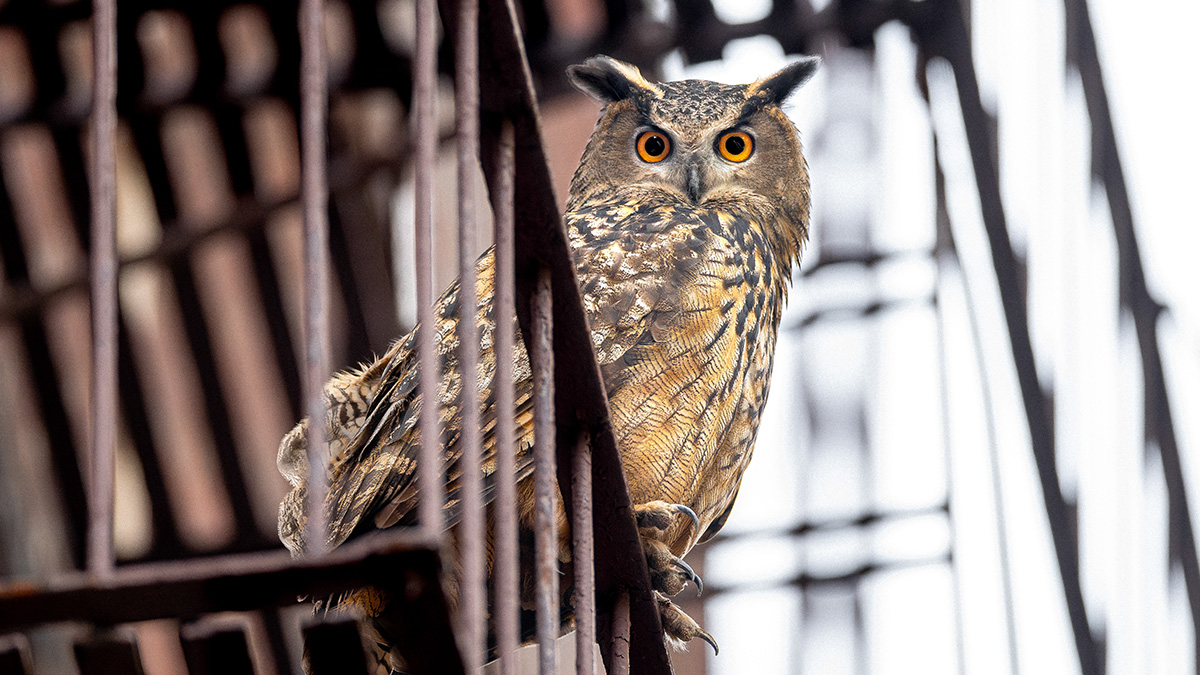
Wild Inside is Penny Lane’s new HBO documentary about Flaco, the celebrity Eurasian eagle-owl, stitched together almost entirely from the footage of the everyday New Yorkers who chased him across Manhattan with their phones. While listening to the opening voiceover, I kept thinking, where the hell was I when all this was happening?
Flaco escaped the Central Park Zoo in February of 2023, lived a full year loose in Manhattan, became the most photographed owl in the history of the world, and I missed it. I started thinking back. During Flaco’s year on the run, I was still getting my hair cut by Juan on the Lower East Side, the same Juan who shows up in this movie. And somehow the biggest wildlife story New York had told itself in a decade flew right over my head. All puns intended.
With Instagram accounts like Yerr.nyc and the like, I assumed I’d know all the goings-on of the city. But sometimes you really do have to be outside, on the exact blocks where the story is unfolding, knowing the people who live it. I had left the Lower East Side for the forgotten borough a few years earlier, and Staten Island might as well be Florida unless you commute into the city for work. Even then, you could be oblivious.
I only understood how big Flaco fever was when I started asking around. I work on the Upper West Side, and when I brought up Flaco to my coworkers, they lit up. Every one of them went somewhere soft and nostalgic, telling me where they were when they saw him, or the winter they kept looking up hoping to. Three years later the name still takes people on this Loop de Loop of joy and grief.
The last time I remember an animal breaking loose and taking the city with it was the Bronx Zoo cobra back in 2011, the one that got a fake Twitter account and one hundred thousand followers while hiding in a dark corner just two hundred feet from her exhibit. So when I first heard about Flaco, part of me thought, here we go again, another critter with a story. I was not ready for the film to be about so much more than the bird.
The story that found her
I got to spend an hour with Penny Lane, the director, and the first thing I wanted to know was whether she went looking for this story or whether it came looking for her.
“It totally found me,” she told me. “I’ve never had a movie that more fell in my lap than this one.”
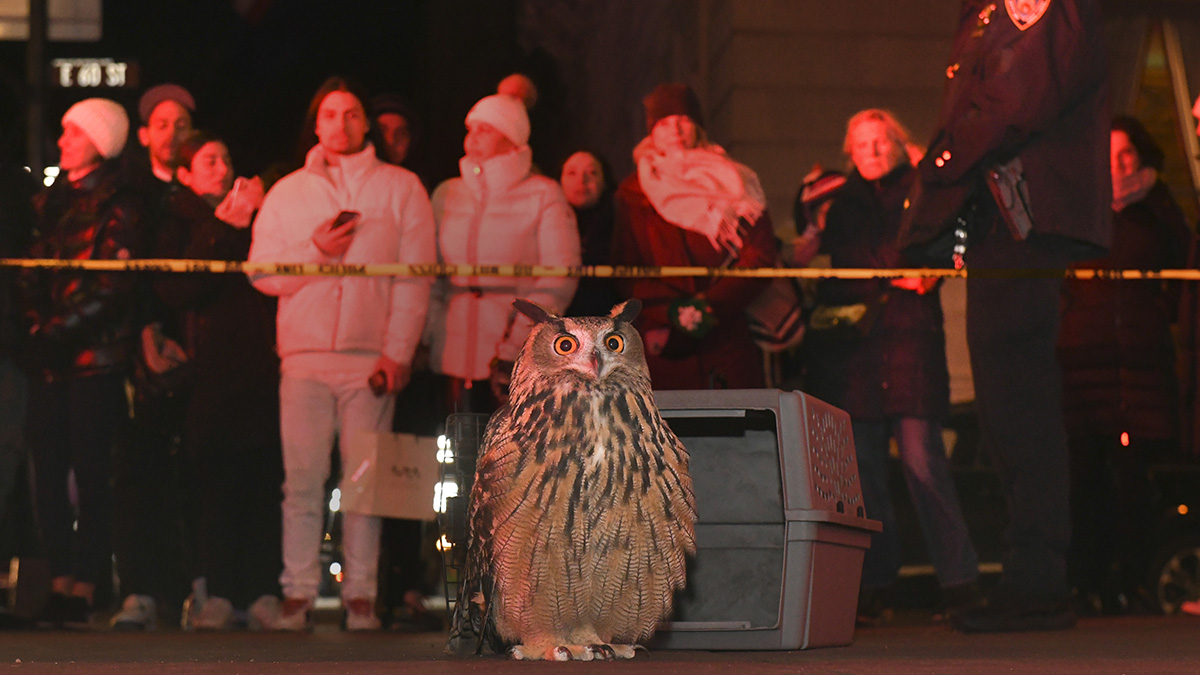
The way it fell is almost too New York to be true. The first man you hear in the film, the one who comes across a giant owl standing on a Midtown sidewalk, is Penny’s dear friend Jeremy. He was leaving a memorial service, heading for the train, when he walked into Flaco near Bergdorf Goodman and the Plaza Hotel. As someone in the film puts it, the least owly place in all of Manhattan. Jeremy is not much of a bird person, but he knew that Penny is, so he texted her the pictures. From the instant those photos hit her phone, she was obsessed.
A chorus, and three shots
The thing that stunned me about Wild Inside is how much of it was filmed by people who are not Penny Lane or her crew. This is a movie stitched together from a whole city’s phones and cameras, and I wanted to know how she gathered all of that and shaped it into something that moves like a story instead of a pile of clips.
“I knew from the beginning that would be a big part of it,” she said. From the first night, Flaco had his own paparazzi. He was documented from day one. Penny loves working this way, she told me, because it turns the film into a chorus, a crowd of New Yorkers all speaking about the same owl through their own eyes.
Then she told me that for all the footage of Flaco in the film, she and her crew, professional filmmakers with real gear, came away with only about three usable shots of him themselves.
Three.
“Filming an owl is so hard,” she said. He is only active at night. You need specialized equipment. Finding him was hard before filming him was even possible. The movie exists, she said plainly, only because of all the people who were out there filming him the whole time.
Let’s think about that for a moment. The director of a feature about a bird barely shot the bird. A large part of her work was walking up and down the streets handing out flyers that asked, have you seen Flaco, do you have a story to tell. It was going on the radio asking strangers to send their pictures. It was earning the footage. The secret sauce of doing a documentary this way is cultivating genuine relationships with folks who trust you enough to hand you what they captured.
Penny and her team paid every single person who contributed footage the same licensing fee, and gave each of them the choice to take the cash or donate it to the Wild Bird Fund, the wildlife center that received Flaco’s body and cares for the city’s birds as they battle the same poison and glass that took him. Enough people gave it back that they raised over fifteen thousand dollars for the Fund.
Make me care
The other question I had was about the people. The birders. Because the reason the film works is not the owl. It is the humans orbiting the owl, and how much they care.
The number one rule in visual storytelling is: make me care. Wild Inside made me care because the people in it cared, and because Penny let me learn their stories until their past obsession with Flaco became my present one.
Finding the birders, she said, was the easy part. The core group, David and Jackie and Bruce and JP and Anka and David Barrett, were simple to locate because they were the ones posting most about Flaco early, and Penny was following the story like “a crazy person losing sleep over this owl” before she ever filmed a frame. From that core, the film expanded outward, perch by perch, until it reached my barber’s neck of the woods.
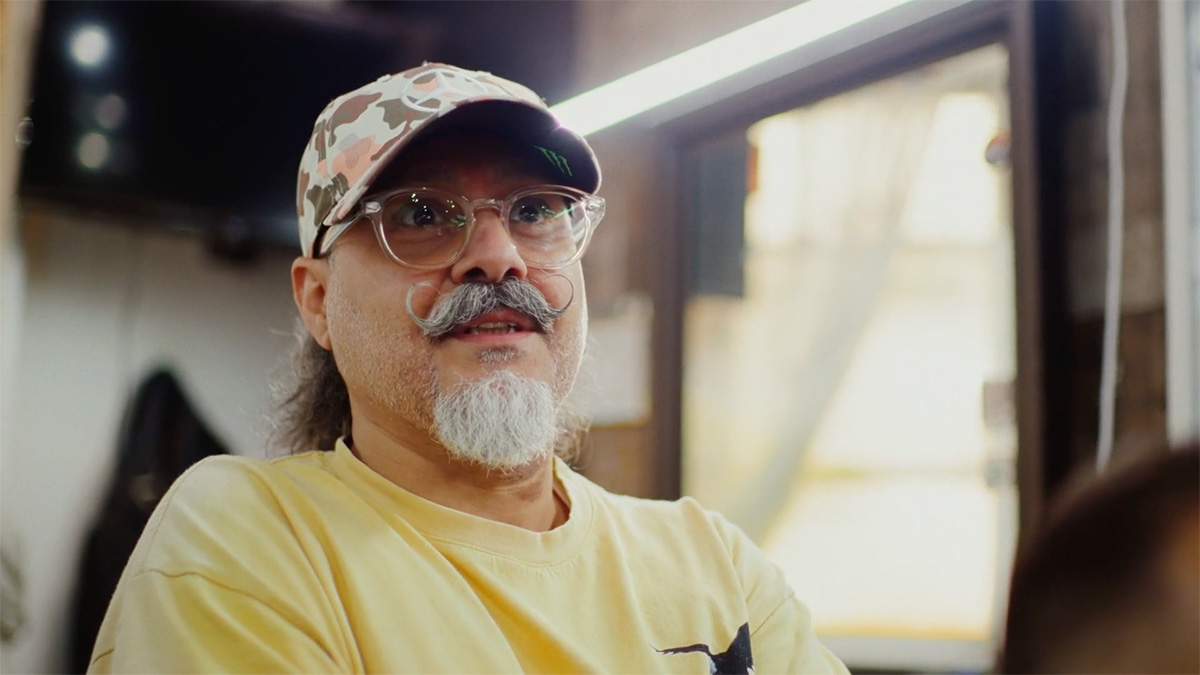
Juan “DonJuan the Barber” Rosado has been cutting my hair for over ten years. When I moved to Avenue D in the summer of 2016, I’d pass his shop on the way to the F. The art in the windows, the gear in the cabinets, and the art all over the walls let me know this was where I was supposed to be.
For the first two years, we didn’t say much. We kept it pleasant, respectful, and brief. With only two barber chairs and very few places to sit, it was still one of my favorite places to go, because the TV would either have on the news or some obscure old-school movie like The Lost Boys, or once in a while he’d blast some super dope house music that I’d Shazam. And of course there were the debates, the round-table, hyper-interesting conversations that I’d just ear hustle on. Again, I didn’t say much. I just paid attention and laughed as the jokes were cracked. It was a real neighborhood spot.
This went on for like two years, just brief talk, and then one day we got on the topic of red-tailed hawks, because one had landed on my AC unit. He lit up, shared his pics, and told me about the birds he’d photograph in Tompkins Square Park, which was like a fifteen-minute walk depending on your pace.
Penny told me how they stumbled upon Juan. She and her crew were walking the blocks where Flaco had been seen, and of course they met local legend Freaky Frige, a real staple of the city, who told them, you have to meet Juan.
So when I saw Juan get his flowers in an HBO doc, I was mad happy for him. I leaned in closer to my TV like, “Okay Juan, I see you, brother.” His take on Flaco’s odds of survival was delivered with the accuracy and candor only a barber of his stature could pull off.
A portrait of New York
I told Penny, respectfully, that the film felt almost obsessively thorough. Bodegas, barbershops, preschools, tattoo parlors, halal carts. I asked why she braided in so many perspectives.
“As we were making it,” she said, “we started to realize we were creating this kind of portrait of New York.” The core birding group, she pointed out, is diverse on its own, and still it is not the whole cross section of this city. So they pushed outside of it. And the reason they could is the most beautiful structural gift in the whole project.
“As Flaco did,” she said. “As he left Central Park and started exploring different neighborhoods, it gave us the opportunity to represent different neighborhoods in the movie. He gave us that gift too.”
The bird wrote the map. His odyssey down to the Lower East Side, up to the Upper East Side, all over the island, handed the film its geography. Flaco chose the neighborhoods, and Penny followed, and that is why the movie feels like the whole city instead of a corner of Central Park, akin to one of my other favorite HBO docs, Banksy Does New York.
Of course a Eurasian eagle-owl ended up a New Yorker. Everybody here is from someplace else. Go back enough generations and every family in this city arrived from somewhere, the South, the Caribbean, Europe, West Africa, take your pick. The film covers the pigeons that settlers brought over from Europe, the brown rats that are not native either, all these transplants who made the place work. Flaco was a foreigner who trusted his instincts, hustled to eat, and made a name for himself, which is one of the most New York things you can do.
No dog in this fight
For me, watching Wild Inside was intellectual acrobatics. It kept flipping, swinging, and tumbling my stance on whether Flaco should be free or locked up with three hots and a cot at the Central Park Zoo. I’d land firmly on one person’s side, thinking, yes, Bruce is exactly right, and a few minutes later I would be just as sure that Jackie was right, and Bruce and Jackie want opposite things for this bird. I kept bouncing. And I consider myself a reasonably smart person, so it unsettled me to feel my own conviction slide around like that.
When I described this to Penny, she finished my sentence. “Bruce is so right,” she said, “and then you’re like, Jackie’s so right.” She felt it too. Ambivalence is par for the course when you’re in conversation with passionate people from different walks of life who are all knowledgeable about the same topic.
“I have no dog in this fight,” she said. “I was really trying to represent the complexity of the story.”
And it is complex. Flaco’s story, she explained, inflames a real debate on several fronts at once. The ethics of keeping animals in zoos. The ethics of releasing a non-native apex predator into a local ecosystem, where he eats the neighbors. The plain question of what was actually best for this particular bird. Should he go back. Should he be caught. Should he be left alone. People held these positions passionately, which is exactly why some of them, especially the ones with the less popular views, took time to trust her. They did not want to end up in a stupid movie that just said, look how cool Flaco is. Earning the trust of the person whose opinion the crowd does not want to hear, that was the work.
The film opens, Penny said, in a fairy-tale register. A wondrous, magical creature appears, and it is so easy to fall in love with Flaco. Then the story turns into something much harder to answer. Okay, now what?
If you want to understand storytelling, study that choice. Another film would have told me what to think. Wild Inside trusts me to hold two truths at once and to flip-flop in the discomfort of not adamantly choosing one. I don’t know how I feel about that, and even if I did, I’m now wondering how easy it would be to sway me from my stance on it.
The goodbye she was always filming
Then Penny told me, in a whisper, that she knew Flaco was going to die. Not as a fear, as a near certainty. She is a birder. She knows how birds of prey die in this city. They die of rat poison, directly or secondhand, because we put it everywhere and we cannot seem to stop. So the proposal she took to her funders was almost unbearably simple. She would document Flaco’s full life, for as long as he lived. Could be a month, could be years. She knew it would not be many years, because owls and hawks do not last long here.
“We put rat poison everywhere,” she said. “Constantly. Like everywhere we go. We can’t stop with the rat poison.”
So the wonder you feel in the first act was filmed by someone who already knew she was making a long goodbye. The arc, from the magical creature appearing outside Bergdorf’s to the death she knew was coming, was the story she signed up to tell from the start. When the news finally came, it wrecked her, and it still does. “I miss him so much,” she told me. “I liked my city more when he was in it. It was a more magical place. It had more wonder in it.”
There is one shadow over all of this that the film could not shine a light on, and Penny was honest about it. The Central Park Zoo would not talk to her. She tried hard, and their silence left what she called a huge gaping hole. She was not looking to make anyone a villain. This is a well-regarded institution, she was careful to say, not some Tiger King operation, staffed by people who surely loved Flaco and were ripped apart when he got loose. She compared it to her own cat getting out into somewhere dangerous, how that would gut her. She wanted to show that humanity, and they would not give it to her. “That was the big failure on my part,” she said, before catching herself with a small laugh. “Let’s call it their failure, though, because it’s their failure, not mine.”
She fully expects the zoo to put out an unfriendly statement when the film premieres, of all places, in Central Park. This is what happened, though. That is the thing about a true story. You do not get to edit out the parts that make people uncomfortable.
Agency, or what makes a story
Toward the end of our conversation I asked Penny the question I most wanted answered, because I am always a student of this writing stuff. What makes a good story, and how do you tell a great one.
Her answer is the cleanest articulation of the craft I have heard since reading Bird by Bird a few years ago.
“It’s about having a good protagonist,” she said, “and the protagonist has to have agency. A good story is the story of an interesting person who makes choices that shape the story.”
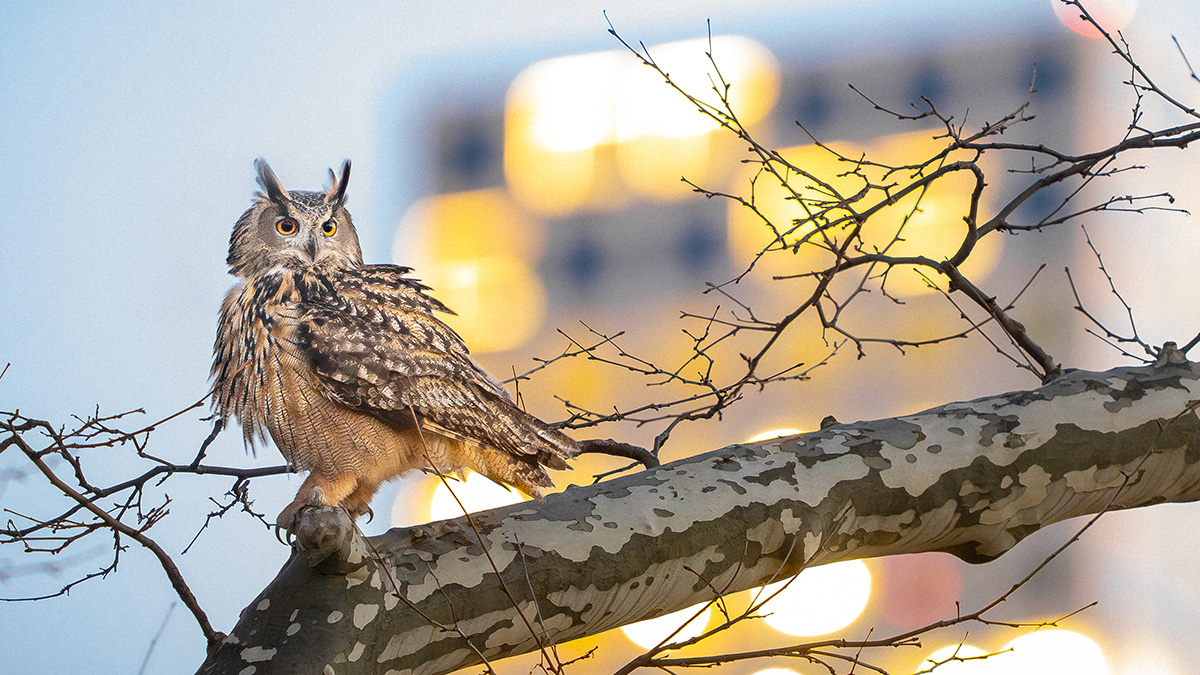
She said when Flaco was in the cage, she could not have told a good story about him. There was no story. Facts. He was sitting on a branch. Any story would have to be about the humans around him, because the humans had agency and he did not. “Once he was set free,” she said, “he started making choices, and his choices shaped the story. That’s when he became the protagonist.”
A character is not interesting because things happen to them. A character is interesting because they make choices that make things happen. Flaco spent thirteen years as a setting. The moment he got out, he became a protagonist, because freedom is what gave him agency, and agency is what turns a creature into a story.
Back in the cage
Penny pointed out that Flaco was safer in the zoo. More comfortable. He probably would still be alive. His whole story, she said, forces you to weigh the value of freedom against the value of safety and comfort, and for me, that is a deep psychological conundrum, an invitation to an existential spiral if you will.
I had a mentor who used to tell me that everybody is alive, but not everybody lives. When I was a teenager, she warned me not to get so consumed with building a life that I forget to actually live it. Kinda like the oil-in-the-spoon story the King of Salem tells Santiago in The Alchemist. For about seventeen years or so I was free as a Flaco. I worked for myself. I made my own hours and my own work. Three months ago I took a full-time job at a nonprofit, a good and meaningful job that I am extremely lucky to have, and for the first time in a long time I am back at a desk.
I once tried to vent to my younger sister about the discomfort of adjusting to a 9-to-5 again. She let me vent, then spoke slowly, like a wise old sage: “Sounds like a job. Welcome to the real world.” She shrugged and chided. Yeah, she zinged me with the truth. When I shared with Penny how and why Flaco’s story resonated with me, she did not miss a beat. “You’re in the cage,” she said. “You’re back in the cage.”
Fudge.
What is a safe life worth if you do not get to live it? Flaco spent thirteen years alive and one year living, and the film makes you ask whether you would take that trade. Some days I think I know my answer. Most days I bounce around like I did watching Bruce and Jackie.
We see ourselves in these animals, Penny said, because we are animals, and at the end of the day all of us want roughly the same things. To look for a mate. To explore. To make our own choices. To feel free.
What he left behind
Flaco died of a building collision, with pigeon herpesvirus and four kinds of rat poison already working through him. Damn. The film does not flinch from any of it, right down to a preschool class talking through his autopsy like a storybook. But the note it leaves you on is not the death. Everyone looked at him through glass for thirteen years, and by the end, up on a water tower with the whole city watching, he was doing the same to us.
He turned out to be a far better ambassador for owls out in the open than he ever was in a box. And in a real way the film is now finishing that work for him, carrying his story to people like me who missed it the first time.
Wild Inside premieres free, outdoors, in Central Park on July 29th, a few hundred feet from the cage he left. It opens at IFC Center on July 31st and rolls out to more than forty theaters around the country, with special screenings on International Owl Awareness Day, August 4th.
So go see it.