My experience felt more like, let me go holler at Kevin and see what he’s up to, and while I’m at it, eat exceptionally well. And I don’t even know Kev like that. I’ll still call him Kevin or switch it up to Chef Kevin here and there for the sake of journalistic professionalism, but you’ll see what I mean once you finish reading the piece. Shout out to Kev though.
The First Omakase
I told Kevin the truth up front. I’ve eaten around. I’ve had tasting menus and high-end experiences. But this was my first omakase.
So I asked him the obvious question: what’s the best way to experience it?
He didn’t hesitate. “Trust the chef and roll with it.”
So I did.
He told me not to come in with preconceptions about what I liked or didn’t like. “The goal is to let yourself enjoy what the chef has curated, and then find out over time whether you actually like it,” he said.
Kevin also made alterations for my shellfish allergy throughout the night, quietly, without breaking the rhythm. And whatever he gave me instead of what my neighbor had, I felt like I got the better plate.
Except when that crab croquette rolled out.
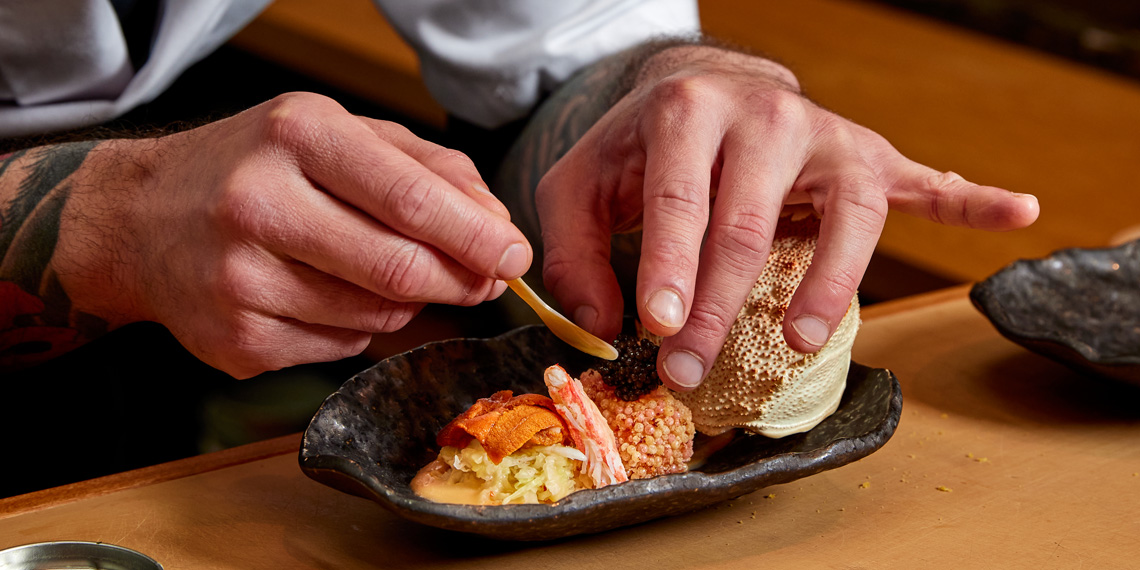
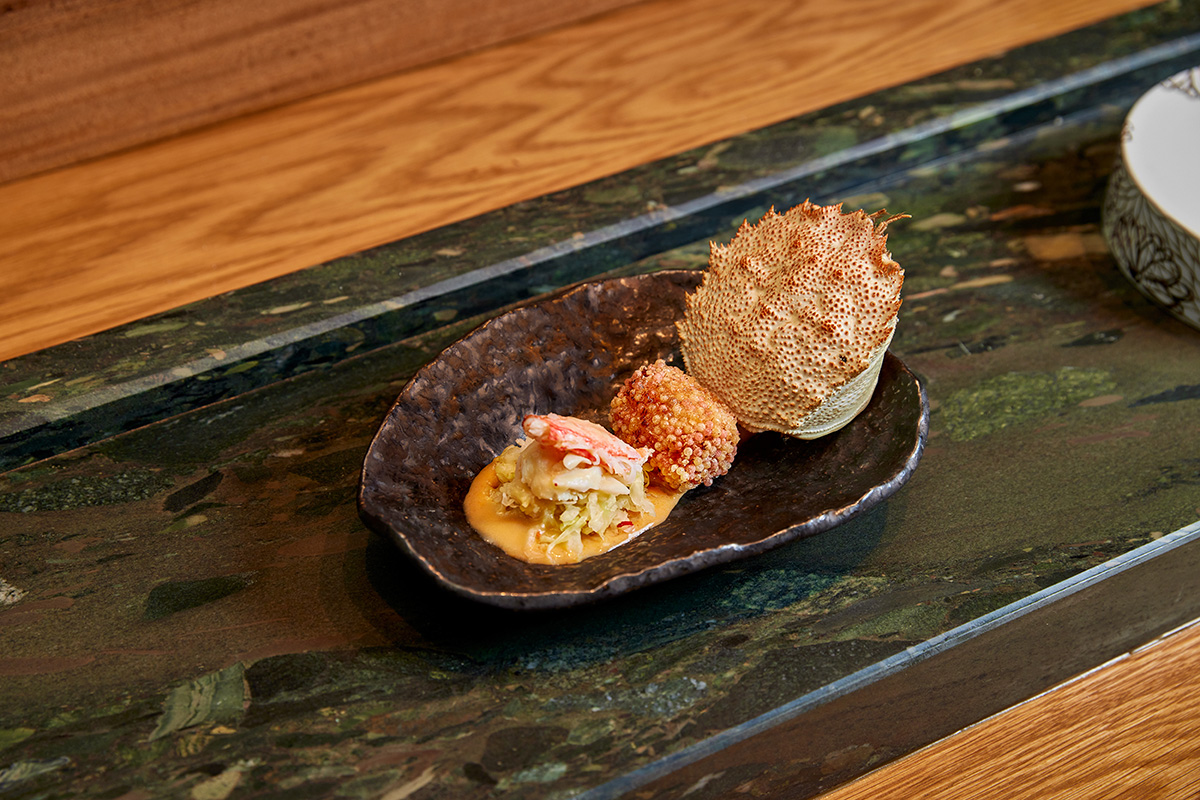
Kegani, hairy horse crab from Hokkaido, with pickled savoy cabbage, a crab croquette, coconut foam, and crab-shell butter shavings. I loved the way it was presented. So much so that I briefly considered an EpiPen-to-the-neck decision. But it was fine dining, and I was raised to act like I had some sense. So I didn’t partake.
The Mentor Who Raised Him
Early in the evening, I asked Kevin about something that stood out in his bio. He names names. He credits people. Sometimes chefs say “it takes a village” and leave it at that. Kevin drew a map. Every place and space that shaped his skill set gets its proper acknowledgment.
His early path wasn’t romantic. After college, he started at a revolving sushi bar in L.A. because friends worked there. It wasn’t the kind of environment that makes you fall in love with craft. Then his girlfriend at the time connected him with a chef who needed part-time help, and within a month that chef said something that changed everything: you don’t have experience, but you’re smart, and you’re good with your hands.
He got hired. And then, Kevin told me, that man raised him for three years.
I asked him what “raised” meant.
“He shaped me into my mentality as a chef,” Kevin said. “In terms of food, he had a huge influence on me because I didn’t know anything about sushi. But he’s the one who reinforced what it means to be a sushi chef. Because sushi chefs are a little different. It’s like being a baker. The same applications that a regular chef works with is not the same applications that a baker works with.”
Kevin still visits him when he’s back in L.A. His mom and sister even call the man otōsan, dad in Japanese, which tells you what kind of bond that mentorship became.
From there the résumé got louder: Yamashiro, the big kitchen, the high volume, the kind of dinner service that trains your nervous system. Then New York in 2021, where the dining room expects refinement and the margin for error gets thinner. He held the executive chef title at an eight-seat omakase counter, learned seasonal and rare ingredients, and started building that balance he talks about, New York precision with Los Angeles boldness.
Now he’s at Koju. And that whole lived path is right there behind the counter with him.
The Counter as Living Room
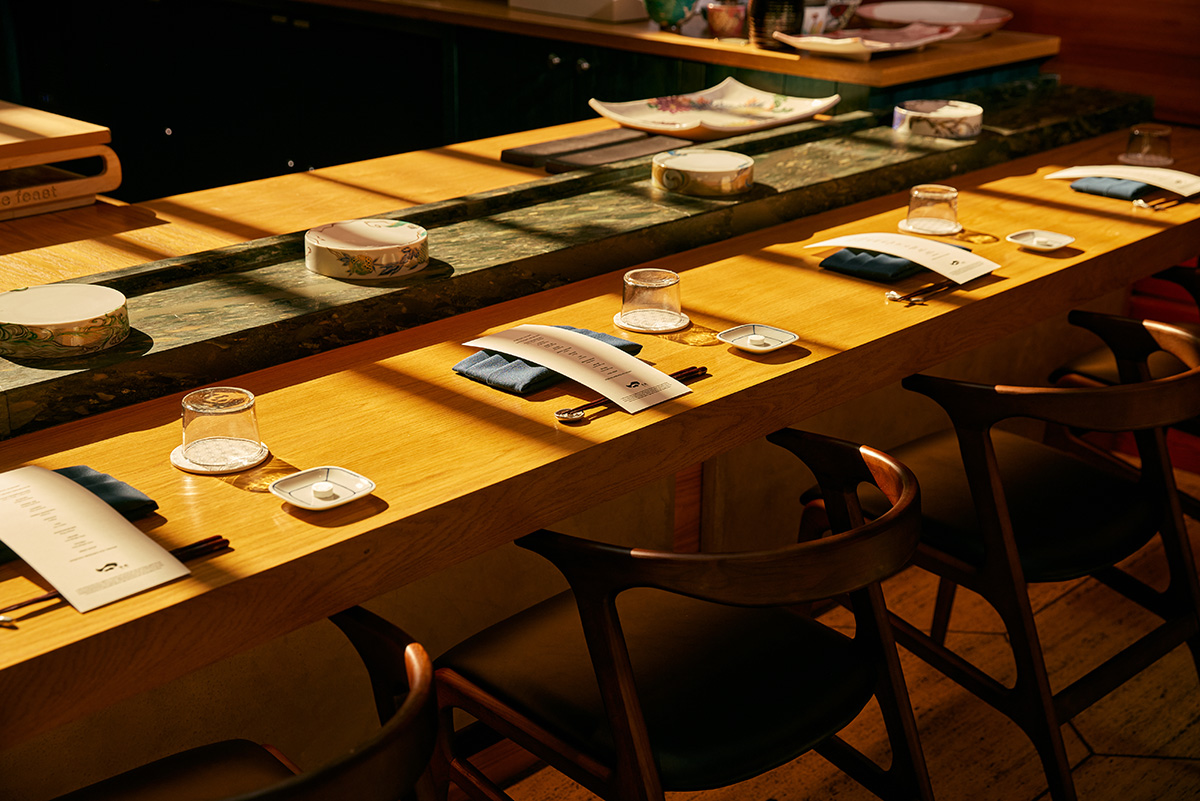
What made the night even better than the food was the way Kevin held court with every person in earshot. There was a couple that wanted to dip in and out of their own conversation. Another couple was into each other but also tuned into whatever Kevin was talking about. And then there was me, Mr. Curiosity, asking about everything from the speakers to the bowls to the fish.
Kevin met all of it with ease. The conversations felt real, the kind that move the way they move when someone actually likes people. Meanwhile, his hands stayed steady and precise, putting together contemporary edible pieces of art that were beautiful and equal parts ambrosial.
Somewhere in the middle of it, we ended up in scotch country.
“My go-to, my daily whiskey is either Laphroaig 10 year, if I’m feeling a little weak, and if I’m feeling a little strong, it’s Ardbeg,” he said. “They’re both extremely robust, smoky, iodine, straightforward, really rough, mean whiskeys.”
Then he told me about the first time he saw Ardbeg Wee Beastie. The tasting notes read: savory meats, tar, rope. “I was like, who in the world would buy this?” he said. And then he bought it. And it became one of his dailies.
See? That’s some shit I’d do.
The Laugh With Range
Kevin’s laugh. It’s not one laugh. It has range.
There’s the regular one, conversational, polite. Then there’s the one that happens when something really gets him, and it turns into the most unique sound. The kind that makes you laugh along automatically, not at him, with him. He meets whoever’s in front of him where they are. He reads the room on the fly, leans in when it’s welcome, falls back when it’s time, and makes it all feel effortless.
That laugh told me he wasn’t just working. He was enjoying his life as it was happening.
My mom works with children, has for over 40 years. I asked her why she hasn’t retired. She said some people have a job, some people have a career, and what she has is a lifestyle. No clock. No separation. It’s just what she does.
That’s Kevin.
The Whisky in the Soy Sauce
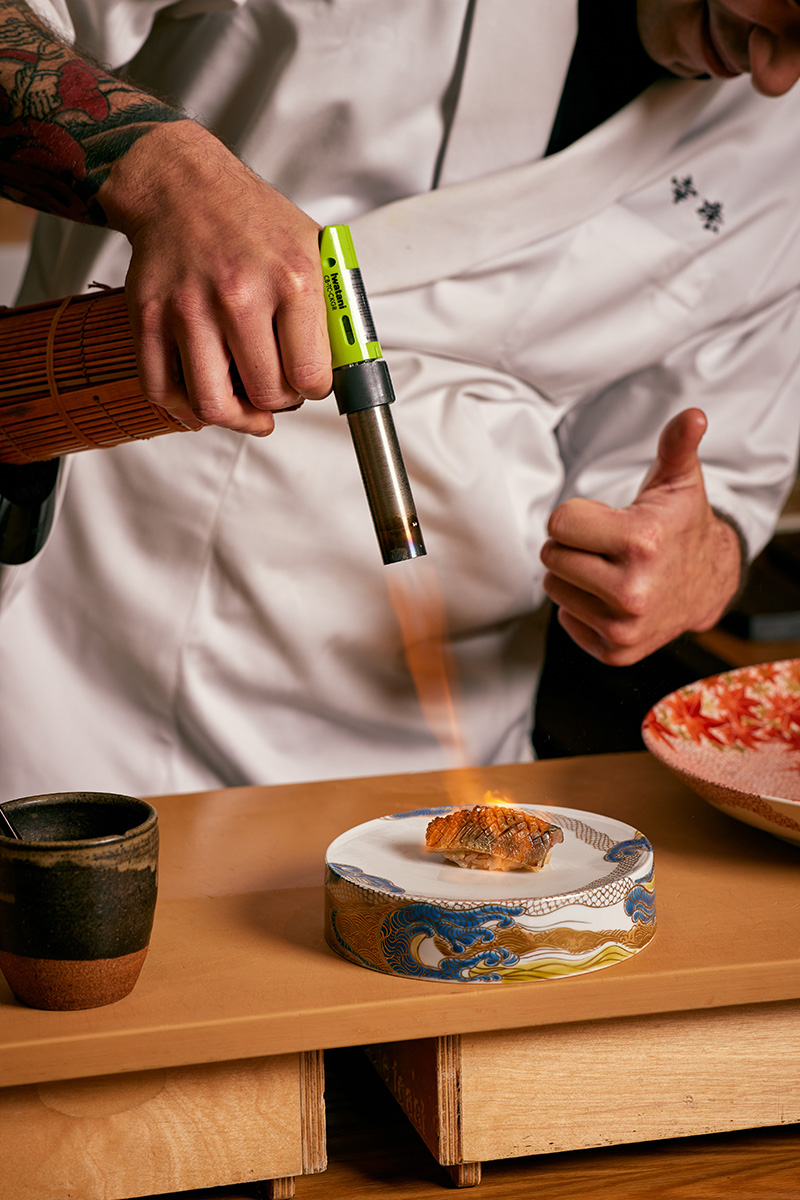
At one point, my friend Karen, who’d been to Koju before and had been quietly coaching my etiquette all night, leaned in and whispered the kind of sentence that turns a grown man into a 10-year-old. There was scotch in the soy sauce. And of course I repeated it like a kid echoing his uncle’s profanity.
“There’s whisky in the soy sauce!?”
Kevin Garrison didn’t even flinch. “Scotch in my soy sauce,” he said, like this was the most normal thing in the world.
Then he gave me the origin story. A mentor in Los Angeles named Shige Fujimoto. Kevin said he went to Fujimoto’s restaurant and clocked the cooking sake he was using. “I was like, yo… that’s nice sake to just drink,” Kevin told me. And Fujimoto looked at him and said, “Kevin, if you don’t want to eat it, don’t put it in your food.”
Years later, the light bulb clicked. If you want to eat it, put it in your food. So Kevin started putting whisky in his soy sauce.
“It was a long road to find the right whiskeys and understanding how to balance them,” he said. “You don’t need very much, but it will wreck your sauce… The goal is never for you to taste the sauce and be like, you put whiskey in here.”
That never came up during the meal. I only learned because the conversation got there. And that’s Kevin as a teacher. Pour curiosity into the moment, and he pours the answers right back into your cup.
The Fish That Made Me Question Everything
There were textures and ratios in the fish that I’m still thinking about. Different levels of fat, different kinds of sweetness, different kinds of melt. Fish I’ve never eaten before. Combinations I would not have ordered on my own. There’s a certain kind of bite where you slow down without deciding to slow down. You just do. That kind of bite showed up more than once.
And then the king salmon happened.
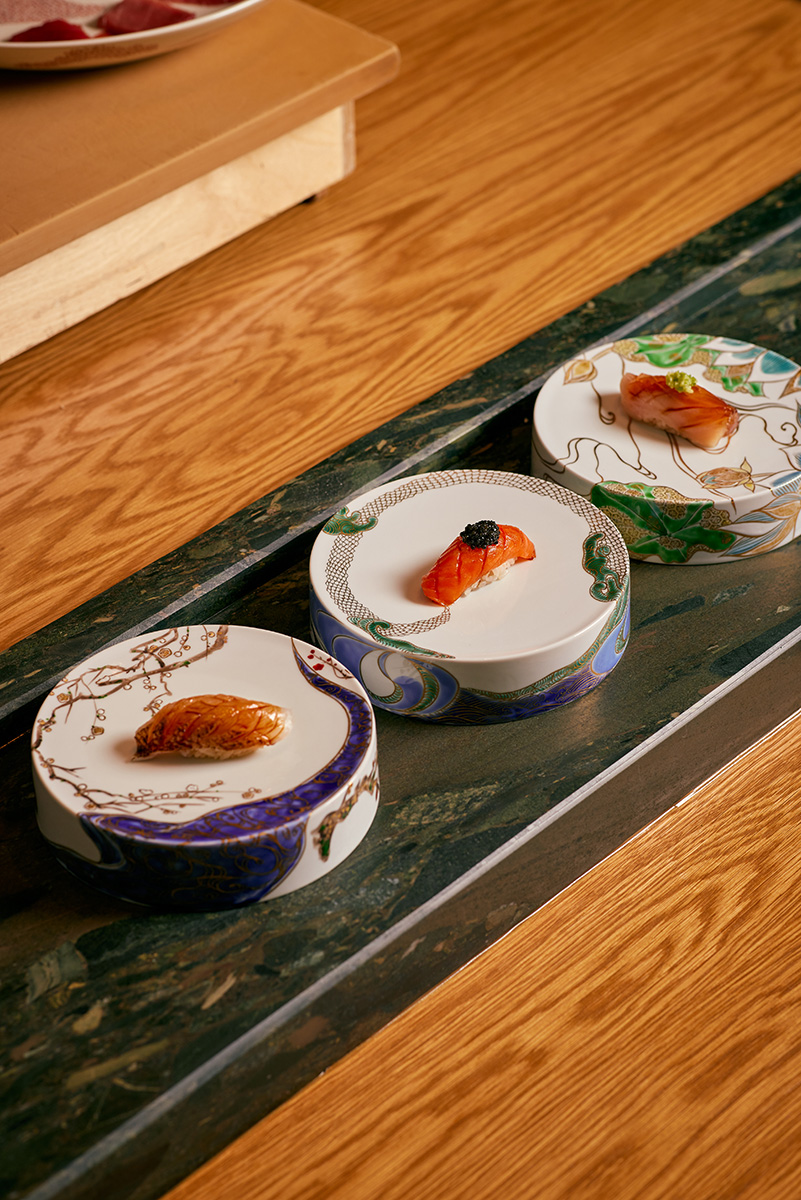
“Hi guys. We have king salmon from Big Glory Bay, New Zealand. It’s been aged for 10 days, smoked in sakura wood chips and served with Russian osetra caviar,” Kevin announced. A minute later, he called it what it was. “Signature. My signature piece.”
I told him the truth: I was questioning whether I actually don’t like salmon, or whether I’ve just never had salmon prepared by someone who understands it like this.
Kevin broke down why he avoids most Northern Hemisphere salmon for sushi. “They tend to have a very soft texture and a little gaminess,” he said, which is why he uses salmon from New Zealand. Then he described exactly what I was tasting. “Zero gaminess,” he said. “It’s not mushy. It’s a little tight, but it’s super fatty.”
I told the couple next to me most salmon reminds me of rye whiskey with an aggressive bite, an aftertaste I can’t get past. Kevin’s was smooth all the way through.
He also talked about his rice the way a musician talks about their instrument. Koju’s rice, he said, is more Southern style. Softer, fluffy, comforting. It pairs better with rich, tender fish. But the technique is more Tokyo style. They age the fish, but they don’t oversalt it. And the soy sauce, he said, is smooth, not salty. Everything is calibrated to work together.
Then he said something that made me laugh because it was so blunt.
“I hate white fish,” Kevin admitted. “I just think most white fish suck. It’s boring for sushi.”
And then he explained why there’s still one on the menu. You can’t have an omakase with no white fish. So he found one he actually respects: a flounder from Hokkaido with real fat content and a wild texture, rich but still elegant. Even his compromise has intention.
View this post on Instagram
The Handroll That Muted the Room
Chef Kevin has confidence about his handrolls.
“I would put my hand rolls to the test with others,” he said. “My nigiri, I know a lot of people make amazing nigiri. But hand rolls? Let’s go.”
Then he broke down the architecture like he was diagramming a blueprint.
A cut roll is majority rice, he explained. A handroll is a balanced ratio of seaweed, rice, and protein. Nigiri is heavy fish, light rice. Each form has a purpose, and Kevin knows exactly what he’s doing with all three.
My yellowtail handroll at the end of the night was the standout. It hit like a bouquet to the face. I took the first bite and the room went mute. Karen said something, but I didn’t hear it. Kevin said something, didn’t hear that either. The music dropped back. The couple to my right evaporated. Everything I was chewing commandeered my full attention.
Subtle and bold at the same time. Fresh, tasty, extraordinary.
I could turn this into a whole ’90s Nuyorican slam poem, but you get it.
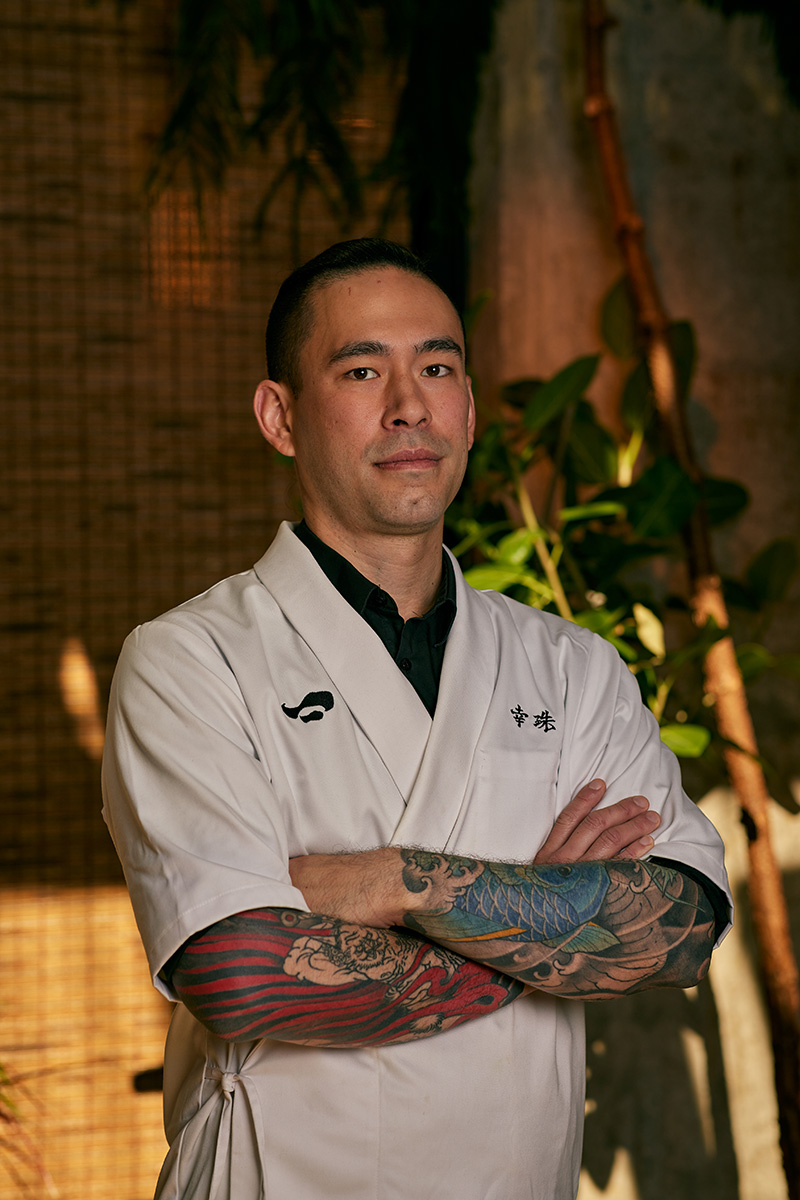
Everything Is Aligned
If you read Kevin’s bio, you’ll see the path. But the bio can’t capture what it feels like to sit across from him. I felt like I was kicking it with a childhood friend who just happened to be at work, and who just happened to be a master of his craft. The food tastes better when the person behind it is just who they are. The whisky tastes better. The room feels better. Everything matches. Food, personality, culture, environment, sound, service, design, rhythm. Everything is aligned.
When it was time to go, the goodbye didn’t feel like I was leaving a restaurant. It felt like I was leaving a home. That “all right, I’ll see you later” energy.
So here’s the play: go sit at the counter. Show up curious, or don’t. Talk, or don’t. Trust the chef, let the night carry you, and pay attention to how quickly the room starts to feel like it’s yours too. If you’re lucky, you’ll catch that laugh with range. And you’ll leave already planning your return.
Sushi Koju is inside Ace Hotel Brooklyn (252 Schermerhorn Street, Boerum Hill). Tuesday–Saturday. 14 seats. Reservations recommended.