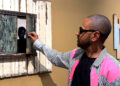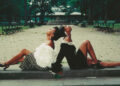
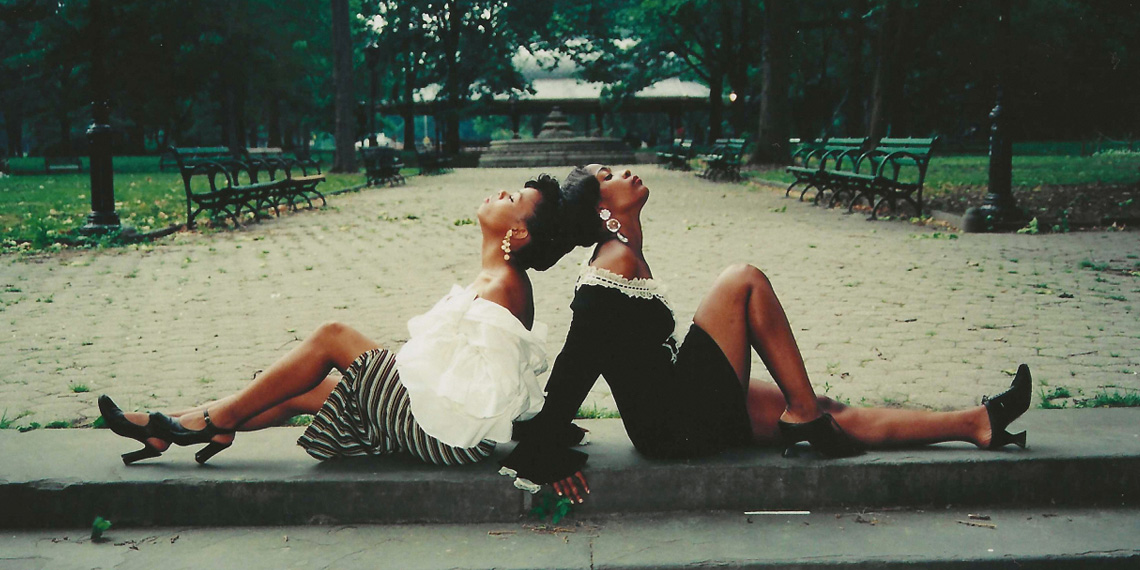
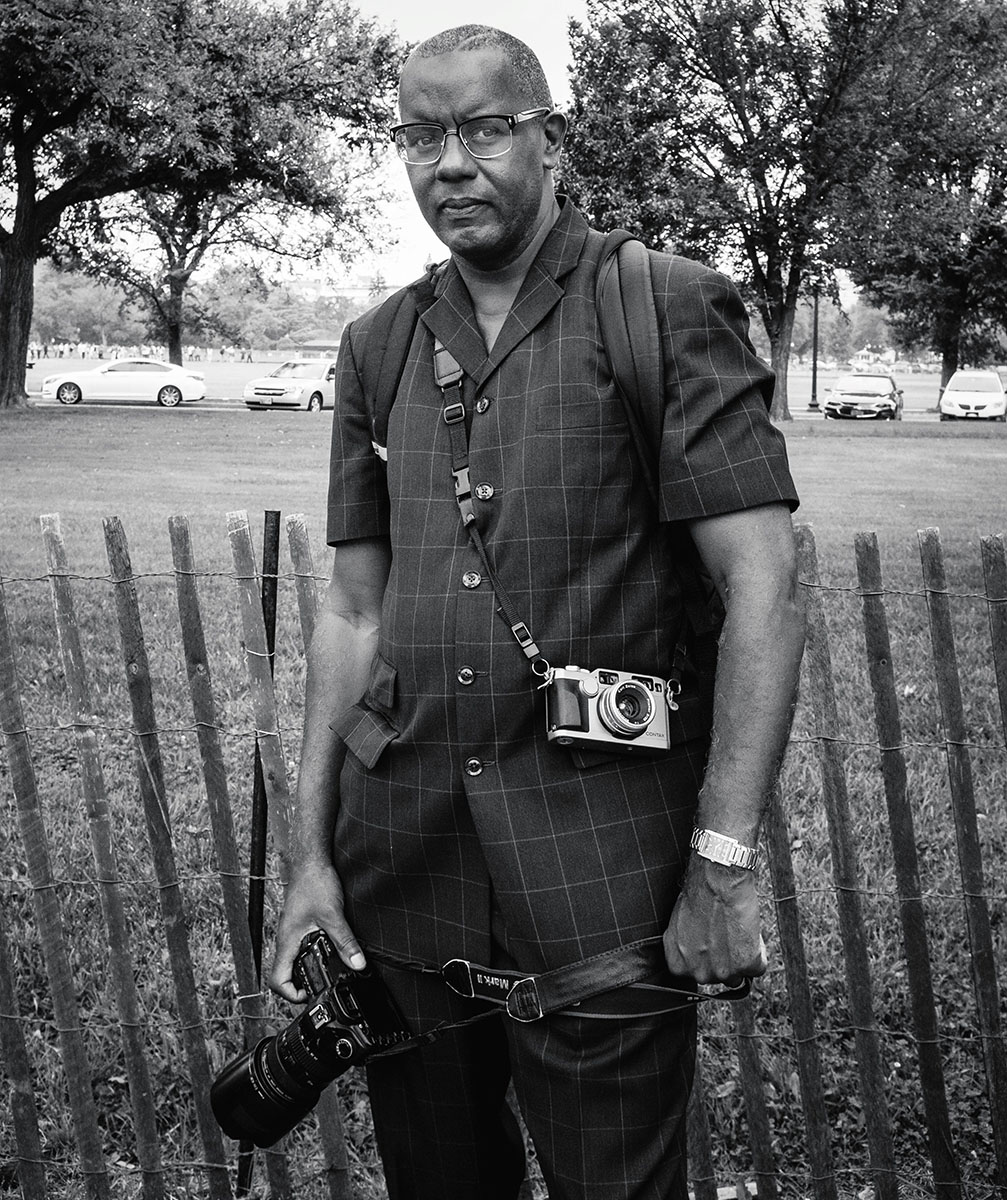
I‘ve known Jamel Shabazz a little over a decade now. Our first conversation was back in 2016. We sat in that little park next to the Brooklyn Museum at a chess table and just kicked it. I was early in my journalistic pursuits, still finding my footing, still figuring out what New York Said was going to become. But to my surprise, he conversed with me as if I had come to him from the New York Times, from the New Yorker, or some other major publication. I hopped back on the train to Manhattan feeling like, I am somebody. I mean, of course I knew I was somebody, but this was different. He was the first guest to thank me for my time in a way that had me feeling as if he was writing a profile piece on me. Hard to explain. Over the years, our conversation has never really ended. It just picks up right where it left off, one long, genuine exchange that deepens every time we find time to build.
The first time I saw Jamel Shabazz speak was at the Andrew Freedman Home in the Bronx back in 2017, then at MoMA, and then at The Museum of Contemporary African Diasporan Arts (MoCADA) when he released his book, Pieces of a Man. So when I walked into the Leica Store in the Meatpacking District a few weeks ago to hear him present his latest book, Prospect Park: Photographs of a Brooklyn Oasis, 1980 to 2025, I was thrilled. His presentations were always excellent. But this evening at Leica was different. There was a presence I had not seen before. It was not just the passion for his work, which was always there. It was the philosophy underneath the photographs, a depth that went beyond documentation into something closer to ministry. He spoke about the missions his father would send him on with a camera, about the discipline of composition and available light that was drilled into him like military training. He spoke about returning home from the Army, about Rikers Island, about needing a place to heal. And then he spoke about Prospect Park. By the time he closed with the words, “We all have the ability to make the world a better place. We all been given certain gifts. So let us use our gifts to try to make this world a better place,” I walked out of there genuinely inspired, carrying something I did not have when I walked in.
What I carried was a question. A question that would not leave me alone as I went home and began turning the pages of the book itself. The question was not about photography or composition or even Brooklyn. The question was simpler than that, and because of its simplicity, it was harder to answer. What is the message of this book? What is Jamel Shabazz, at 65 years old, after 50 years of carrying a camera, trying to tell us?
I picked up the book and I let it speak.
© Prestel / Jamel Shabazz, 2025
Stay Just Like That
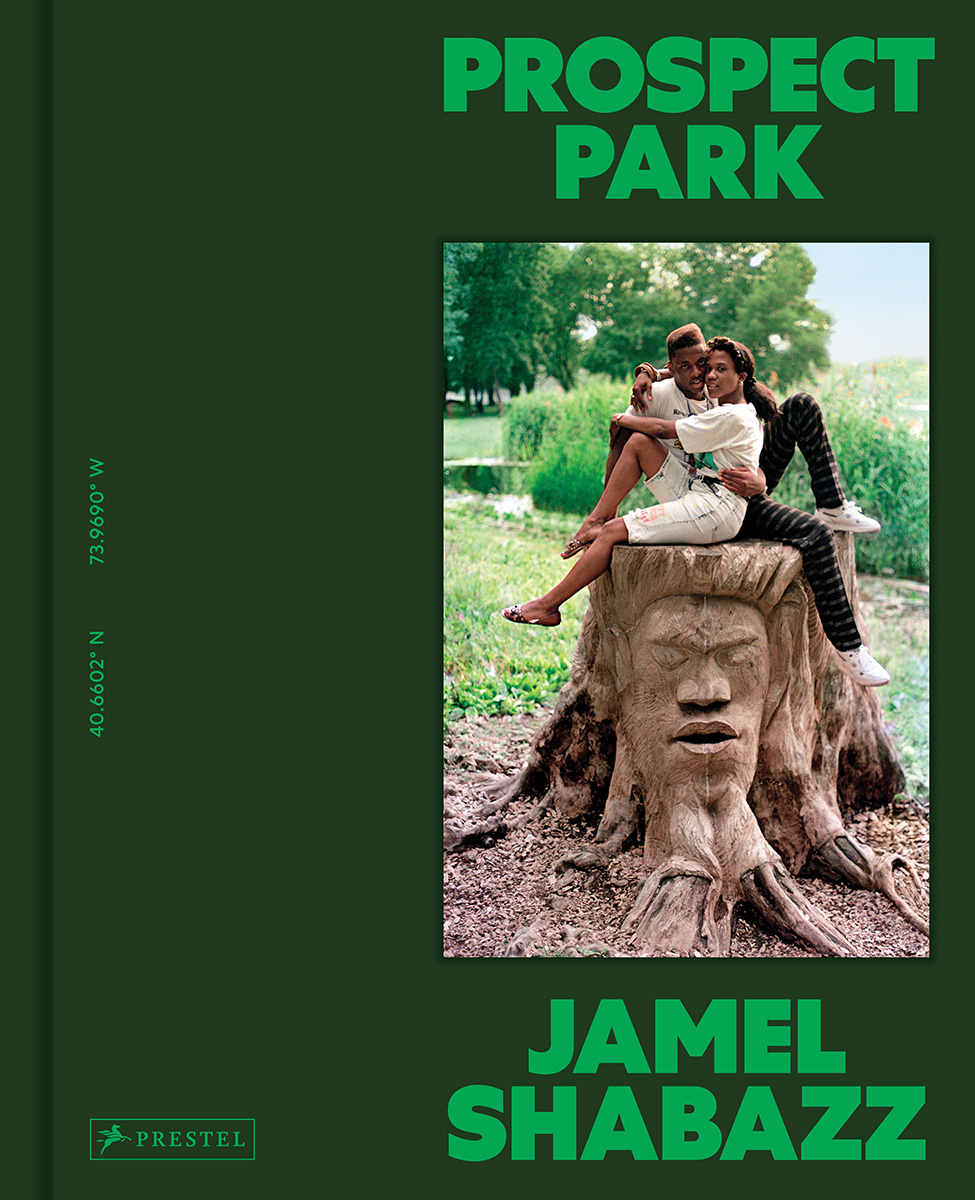
The cover photograph stopped me before I could get to a single page of text. A couple, wrapped in each other, crowning a tree stump carved by Haitian artist Deenps Bazile, founder of Gran Bwa. When Shabazz approached them and made it known that he wanted to capture the photograph, they were going to shift, to rearrange themselves into what they thought a picture should look like. He told them, “Don’t move. Stay just like that.” He walked upon that scene and it was already complete. All he had to do was press the shutter.
That instinct, knowing when not to interrupt the pose, is a form of reverence. It is Jamel recognizing that the moment does not belong to him. And it told me everything about what the next 176 pages would hold.
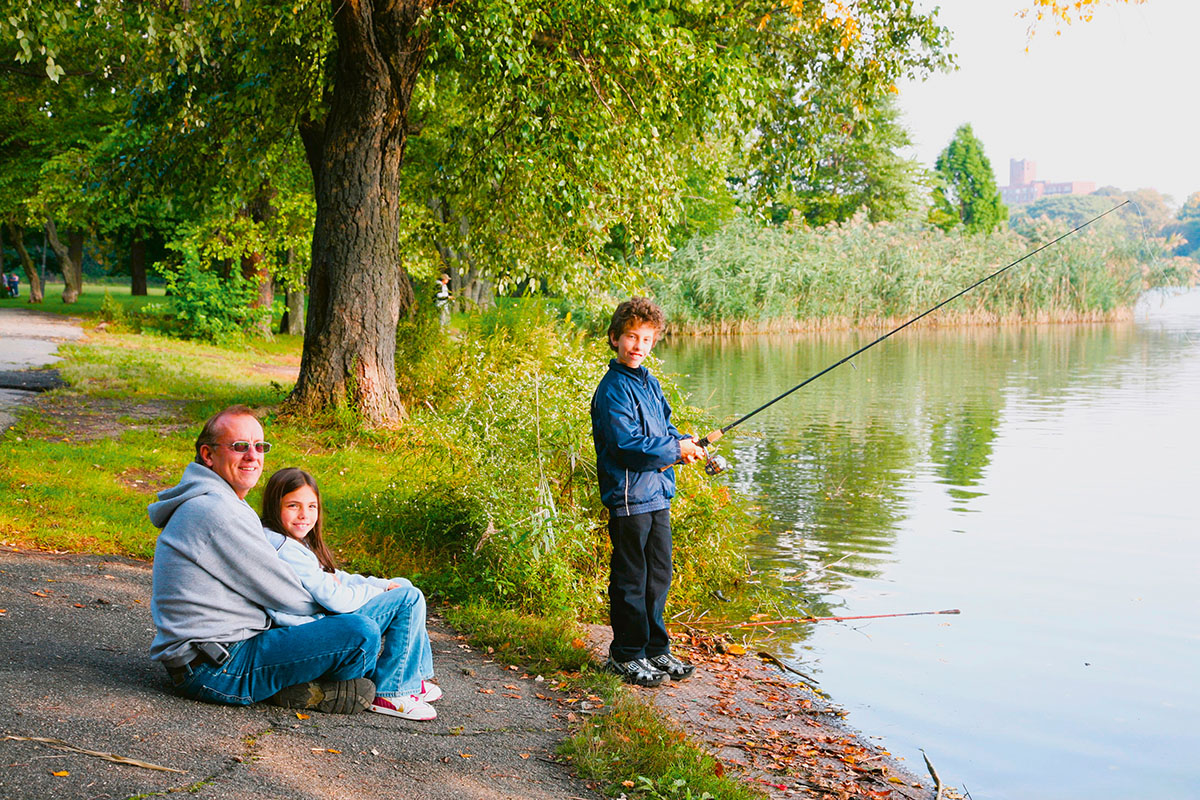
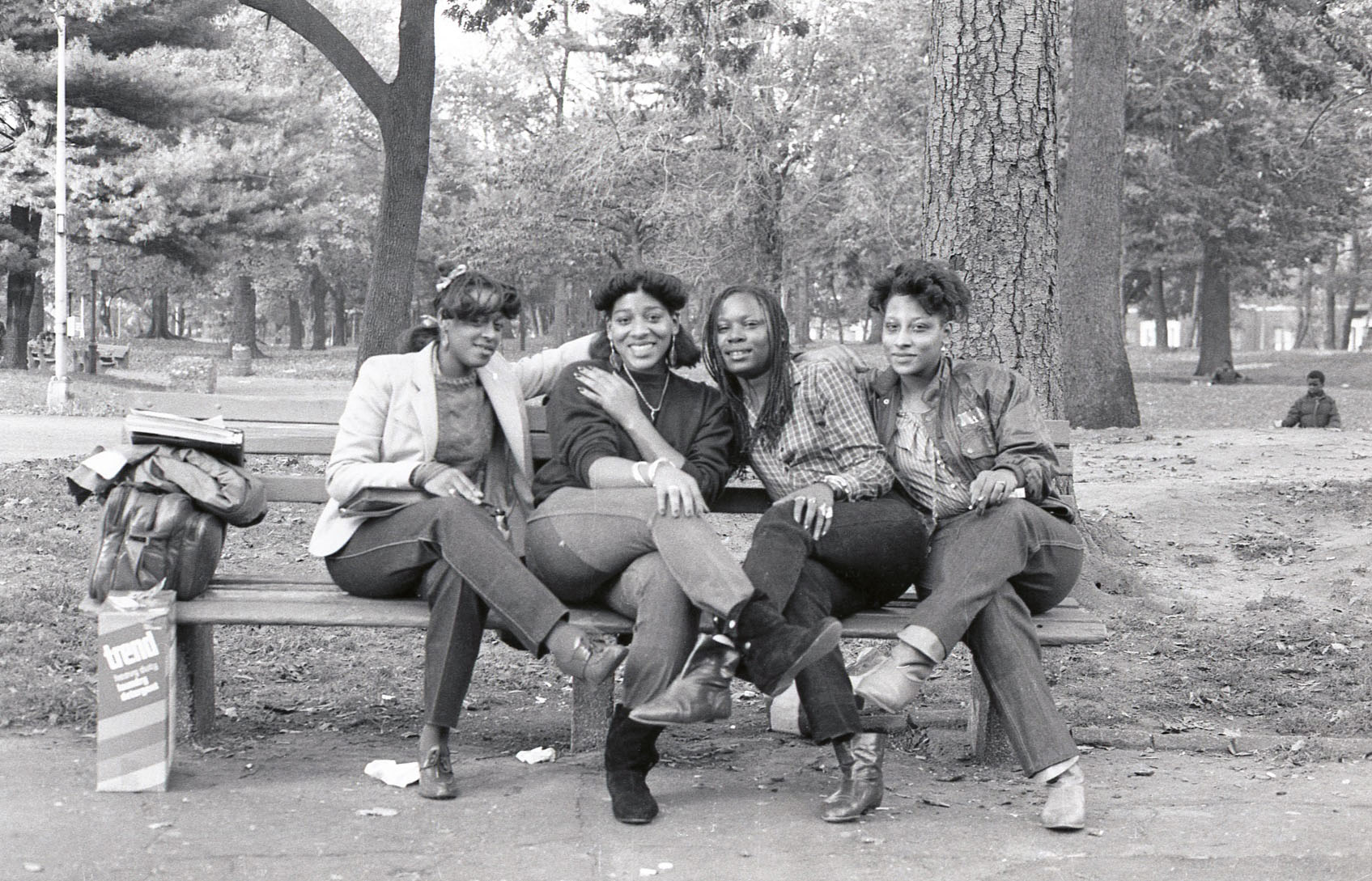
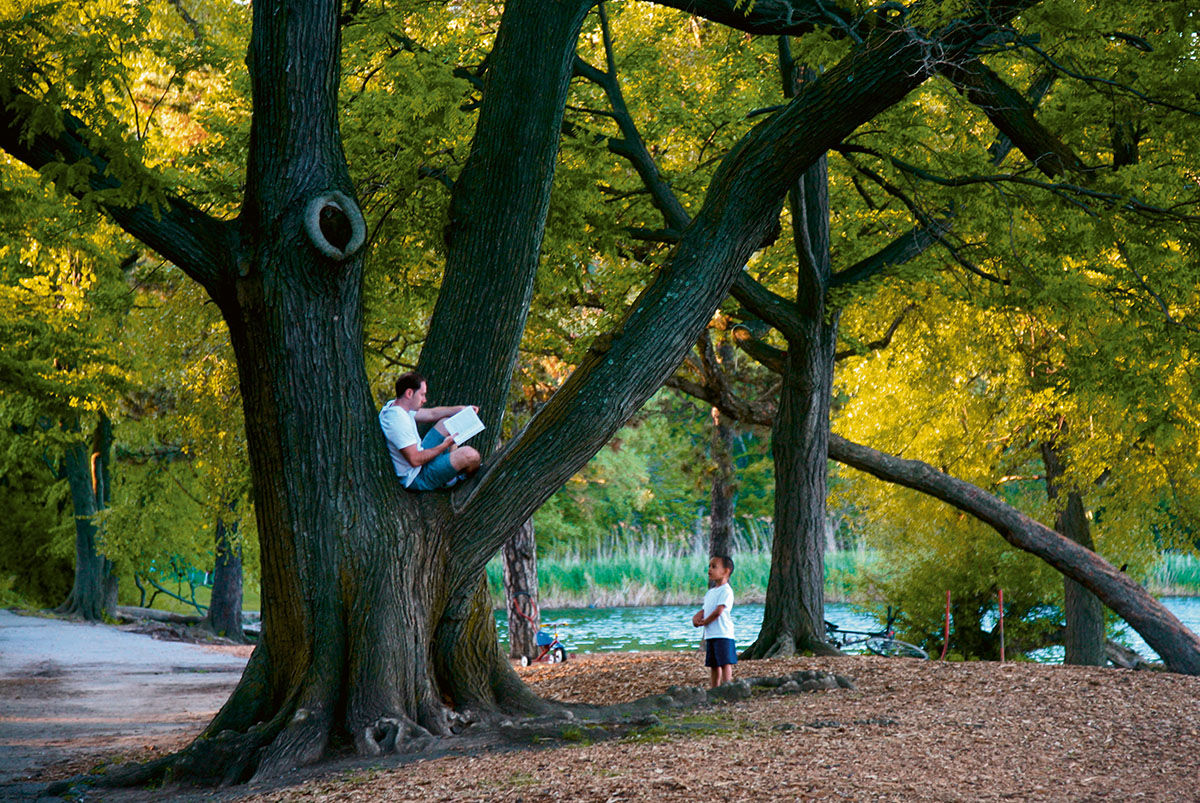
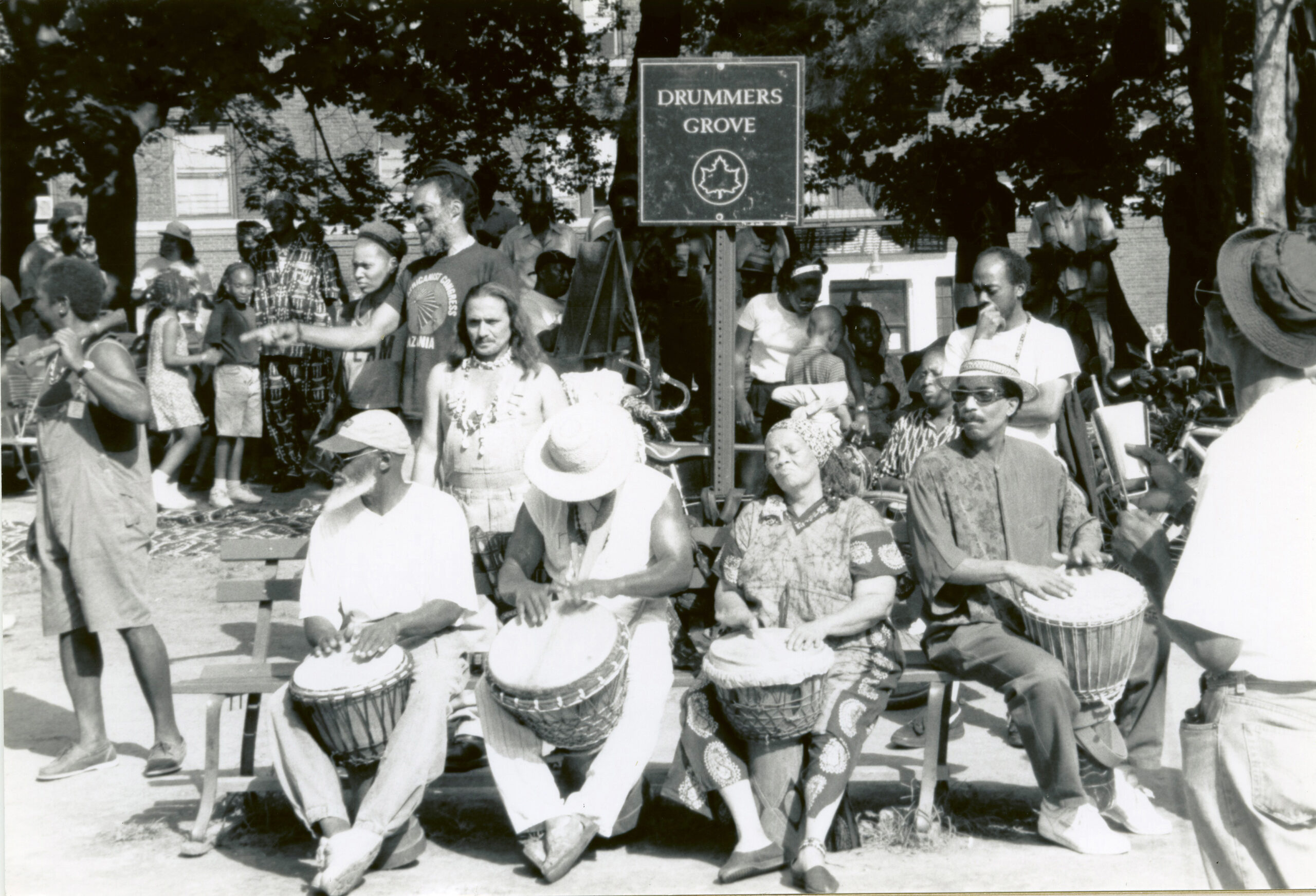
Because the message of Prospect Park is love. The substance of it. The practice of it. Love in its fullness, showing up in a hundred different forms across 45 years of photographs. The love of partners resting against each other in the grass. The love of a father walking with his son through the trees. The love of sisters sitting together on a bench, three of whom are now gone, preserved forever in a photograph that Shabazz captured without knowing their names. The love of community at Drummers Grove, where the ancestral pulse of the drum brought together veterans, artists, Black Panthers, and seekers of every kind. The love of solitude: people exercising, doing yoga, skateboarding, walking alone through the green with their thoughts. The love of companionship between people and their pets. The love of shared interest among cyclists and fishermen and chess players. The love of brotherhood, captured in handshakes and embraces. The love of sisterhood. The love of self, which sometimes looks like nothing more than a person on a bench, breathing.
Love is the message. It is in every frame.
© Michael McCoy, 2016
A Seed of the 1960s
To understand how that message got into the photographs, you have to understand the man who made them and the life that forged him.
Jamel Shabazz was born in 1960, a seed of one of the most turbulent decades in American history. He grew up in the Red Hook section of Brooklyn, the son of a professional photographer who had served on the USS Intrepid and documented life on the ship with his camera. His father’s library was vast. Shabazz read practically every book in it, including, at eight or nine years old, the photography magazines, the war publications, and the issues of Playboy, which in those days published interviews with Malcolm X and Martin Luther King and articles on George Lincoln Rockwell and the American Nazi Party. Before Alex Haley wrote the autobiography, Malcolm was first interviewed in those pages.
But the book that changed everything was Leonard Freed’s Black in White America. His father kept a signed copy on the coffee table. At eight years old, Shabazz began turning its pages, dictionary beside him, encountering racism, Jim Crow, segregation, and lynching through the visual language of photography for the first time. That one book became his roadmap. It showed him not only the beauty of the medium but the brutality of the world he was going to inhabit as a Black boy in America. And decades later, in one of those full circle moments that define his life, Shabazz would meet Leonard Freed’s wife, Brigitte, and form a lasting friendship with her. The compass was already turning.
His father gave him the foundation. He drilled available light into his son. He stressed composition, themes, and contact sheets. He would take a red grease pencil to Shabazz’s prints and mark them up relentlessly. “This is garbage. Your composition is off. You got to do better.” He insisted his son carry a camera everywhere, set at 1/125th of a second at f/5.6, no lens cap, and document the neighborhood. The stores, the highways, the buildings. Shabazz found it boring at the time. He wanted to photograph people, not architecture. But looking back now, he recognizes the gift. His father was teaching him to see.
And then there was the lesson that would shape Shabazz’s entire body of work, across every book he has ever published. His father taught him the power of themes. Fathers and sons. Mothers and daughters. Twins. Handshakes. Bicycles. Love. Once Shabazz had themes, there was never a boring moment in his life. There was always something worth seeing, always a frame waiting to be captured. He has never experienced photographer’s block because the world has never stopped offering him subjects that mean something.
That principle, the power of theme, is one I absorbed directly from Shabazz’s work. Early in my own journey with photography, I was taking pictures of everything, which meant I was taking pictures of nothing. It was his books that taught me to look at my own work and ask, what are the patterns? What am I actually gravitating toward? When I focused on a specific theme, the words on walls and phone booths and buildings that became the foundation of New York Said, everything took off. People finally understood what I was doing. That clarity came from studying his example.
© Jamel Shabazz, 2025
Home to a War Zone
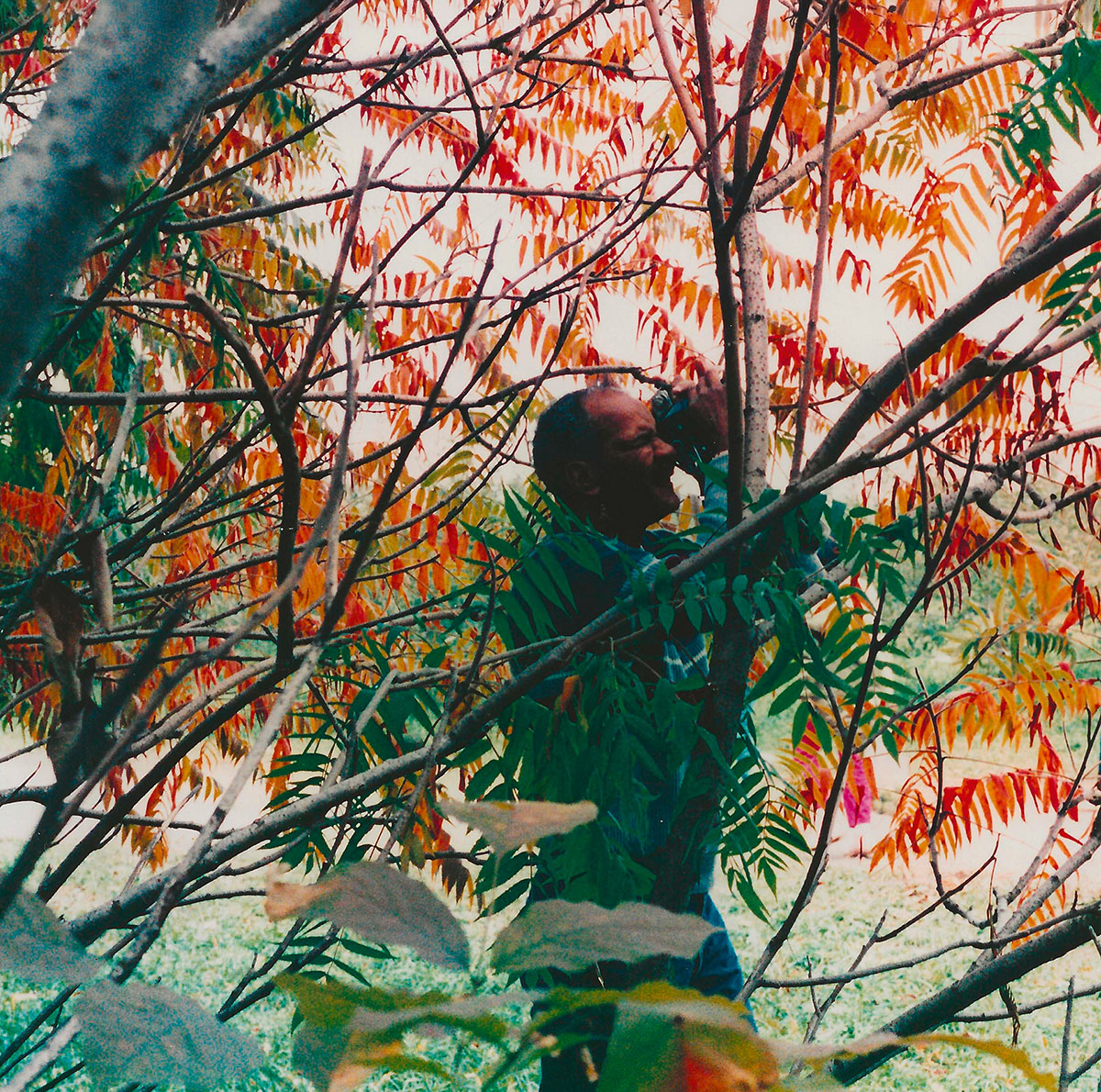
At 17, Shabazz enlisted in the Army. His parents had divorced, he was starting to go astray, and he did not want to be a burden on his mother. He was stationed in Germany, where he spent three years in the infantry, largely without a camera, doing more writing and research than photography. He studied World War I and World War II extensively. He was 17 years old, standing in a country where a war had consumed millions of lives, and the German soldiers who fought in that war were still alive, still walking around in their 50s. That proximity to history did something to him. He wrote in his journal. He made a comprehensive blueprint for what he would do when he returned to the States. And he thought about Prospect Park. Standing guard in the Black Forest of southern Germany, he reflected on the one place back home that reminded him of where he was. He vowed that when he returned, he would find his way back to that oasis.
He came home in the summer of 1980 to a war zone. Not the kind he had trained for in the military. The kind that was killing Black boys on the streets of Brooklyn. Associates had been shot. Young men were dying at the hands of other young men. He looked around for the mentors, for the people who were going to stand up and change the narrative. When he could not find them, he decided he would do it himself. He carried three things: his Canon AE-1, a chess board, and his music. The camera became his recorder and his compass. The chess board became his teaching tool, a way to show young people strategy, opposition, goals and objectives. And the music, the love songs and the protest songs and the jazz, became the frequency through which he connected to the world and helped others connect to it too.
First, he went to the local high schools in East Flatbush, engaging young people, photographing them, bringing some of them back to his home to introduce them to jazz and healthy eating and conversations about relationships. The young women became like his sisters. He would bring them to the park, buy mangoes and orange juice, and just talk. He taught the young men to respect the women. He carried a portfolio everywhere so people could see his intentions were sincere. And then, to keep himself in shape after three years of military discipline, he started running from his house to Prospect Park.
That first run changed everything.
© Jamel Shabazz, 2025
The Frequency
He realized, almost immediately, that there was a certain frequency in the park. People there seemed to be into their health, into nature. There was a calmness that did not exist on the concrete streets. Kindred spirits gathered there. People would acknowledge you, greet you, engage you in a way that did not happen on the avenues where police sirens and traffic and the general chaos of Brooklyn made real conversation nearly impossible.
He started going every day. He would leave the concrete behind, climb up into the hills, and walk where his intuition took him. He met people. Some encounters were brief, some were extensive, but nearly everyone gave him something he needed on the journey. He looked at life as a path, inspired in part by the television show Kung Fu with David Carradine, and he recognized that every person he met was there for a reason. He would engage the older brothers in particular, asking them where they were in 1965, where they were when King was assassinated, what they knew about the war in Vietnam. He would write everything down. He was feeding his brain, hungry for knowledge, full of questions that needed answers.
And then the camera did what cameras do in the hands of someone who carries one with faith. It began to guide him. If his camera was broken, he felt lost, directionless, unwilling to even go outside. But with film loaded and the lens cap off, he was open to the world. He could be riding the train, see a stop, feel something pull him, and get off and walk. He would wander and wander and be about to turn back and then, at the last moment, see a man about to swing his dog in the street and get the shot. That photograph, which he took on the Lower East Side, is called Man with Dog, and it is my favorite Jamel Shabazz photograph of all time. Every time I see it, I stop. I stare. I see something different in it. What I thought was happening in the image was different from what Shabazz later told me about the story behind it. It is, to me, the perfect shot. And it exists because his father told him to never put the lens cap on.
© Jamel Shabazz, 2025
The Light Inside the Walls
In 1983, at 23 years old, Shabazz joined the New York City Department of Correction and was assigned to Rikers Island. His father, the military man, had advised him to take city examinations for the stability and benefits. But Shabazz also knew that this was his assignment. Two associates of his had been incarcerated on Rikers for crimes they did not commit, and they told him about the conditions. He remembered the Attica rebellion. He remembered the Long Binh jail rebellion in Vietnam, where Black soldiers, who made up 90 percent of the prison population, took over the yard and played drums, and the guards despised it. He knew he needed to be inside those walls, not as a prisoner but as a light.
For the next 20 years, he carried his camera into the jails, which was not technically permitted. He developed a strategy, the chess player in him calculating every move. First, he photographed his fellow officers in the locker room and parking lot and gave them copies. Then he started photographing the supervisors, the brass, the white shirts, and giving them copies too. Gradually, he brought the camera into the housing units. He would bring his portfolio and share it with detainees, many of whom were facing 20 to 30 years, and the photographs became talking points, openings for conversation, moments of beauty inside an atmosphere that smelled of spoiled milk, dead rodents, and cigarette smoke.
The violence was ever present. Stabbings, slashings, suicides. Two officers to a housing unit, one behind the gate and one controlling the panels, no weapons. All you had was your intellect. Shabazz used his to try to guide the men, to talk about redemption and atonement, to show them that even in the darkest place, there was beauty waiting outside.
And every day, when his shift ended, he went to Prospect Park. He ran. He meditated. He breathed. He detoxified from the brutality. He went to the park looking for love, because he was spending his days in an atmosphere so full of hatred that he needed the counterbalance to survive. Prospect Park became what he calls it in his introduction to the book: his oasis in Brooklyn.
© Jamel Shabazz, 2025
The Alchemist
The word oasis has always carried weight for me. My favorite book of all time, which I read once a year every year, is Paulo Coelho’s The Alchemist. In that story, the main character is on a journey, following a dream, and along the way he meets phenomenal people who shape who he becomes. When I opened Shabazz’s book and read him describing Prospect Park as his oasis, and then describing his camera as a compass, and then describing himself as an alchemist with the ability to freeze time in motion, I saw the parallels everywhere.
He is an alchemist. He told me so directly when I asked. “When I study the idea of alchemy,” he said, “from my perspective, it is having the ability to freeze time in motion.” And then it goes deeper, because often when he captures an image, he does not understand why. It does not make sense in the moment. But 20, 30, 40 years later, he revisits the photograph and discovers the life lesson inside it. He posts an image on social media and the stories come flooding in. “That’s me.” “That’s my father, who died a couple years ago.” Friendships he formed in a few seconds on the street are renewed decades later through Instagram. The alchemy is not just in freezing time. It is in what happens when that frozen moment is released back into the world.
© Jamel Shabazz, 2025
The Drum
Before Drummers Grove had a name, Shabazz knew it as a feeling.
Growing up in Red Hook, during the summer months, drummers would gather in the projects and play. As a child, still in his single digits, Shabazz noticed something about these men beyond the rhythm. They wore pieces of military uniforms: a shirt with a patch, a hat, beads, a walking stick. He realized they were Vietnam veterans, and the drumming was therapeutic, a way to bond and reconnect with each other after the horrors they had witnessed. That image stayed in his mind for years.
When he returned from the Army and began spending time in Prospect Park, he encountered the drummers again. Different men, but the same energy, the same ancestral frequency. He would see them at Drummers Grove and then, to his amazement, see the same brothers at the Veterans Day parade. It was a full circle moment that kept circling. The drum connected back to Africa, to communication, to lineage. It connected back to Long Binh jail, where Black soldiers played drums in the yard and the guards hated it because the drum was language, the drum was resistance, the drum was survival.
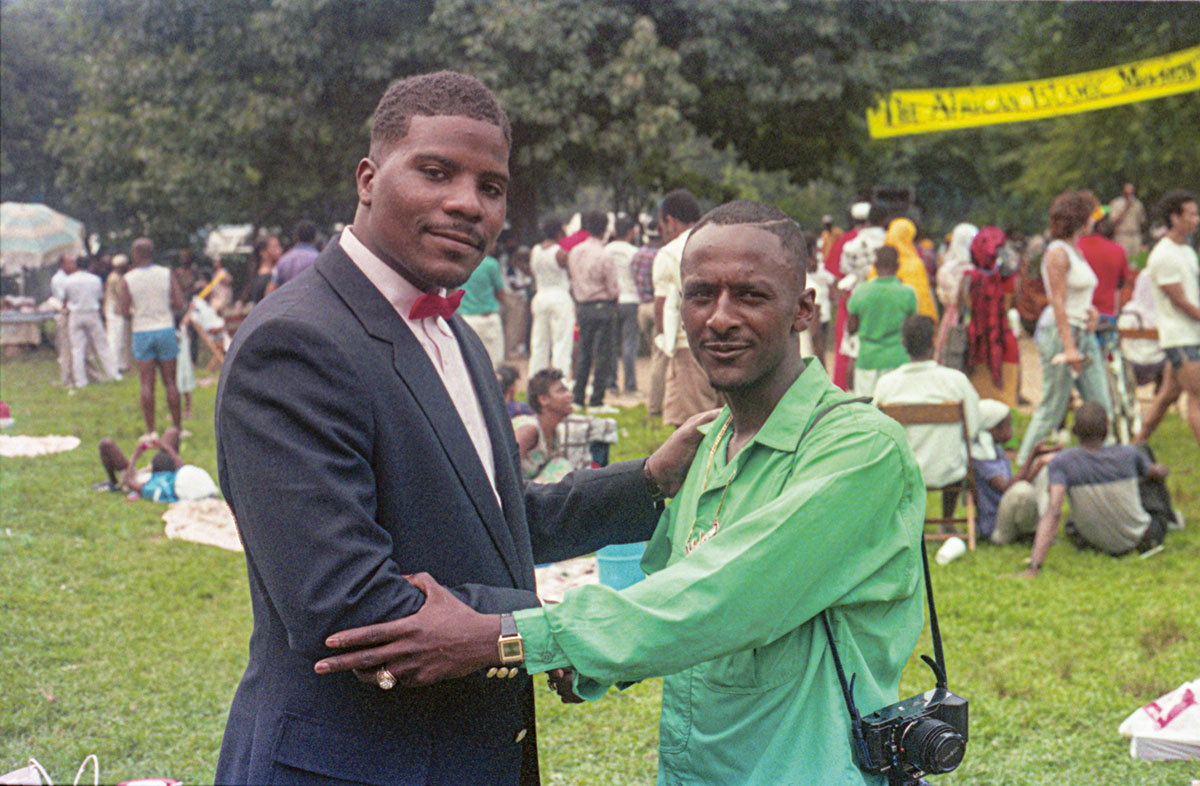
It was at Drummers Grove that Shabazz met Richard E. Green, the Vietnam veteran and activist who contributed an essay to the book. They met in the park at sunset, possibly the only two people in that particular area, and Green was wearing his Army OD jacket. Shabazz recognized the uniform immediately. They were both there for the same reason: searching for inner peace. Through Green, Shabazz connected with other veterans, older brothers who could answer the questions he had been carrying since childhood about the war, about the Civil Rights Movement, about racism and COINTELPRO and what it meant to survive all of it.
But the community at Drummers Grove extended beyond veterans. There were brothers from the Black Arts Movement, former Black Panthers, creative minds of every kind, all gathered in that one ancestral spot because something about the frequency made their spirits feel good. Shabazz was in his 20s. These men were in their 30s. He sought them out because he wanted to be on the path they were walking, and he knew their generation had survived things his had not yet been tested by. He fed on their knowledge, wrote their stories in his journal, and let the drum hold them all together.
© Jamel Shabazz, 2025
Visual Medicine
There is a thread that runs through Shabazz’s entire life and work that can be difficult to see if you are only looking at the photographs. It is easier to see if you listen to him talk. He does not just take pictures and keep moving. He shakes your hand. He gives you a hug. He asks if you need guidance. He reaches in his pocket for whatever he can offer. He is building with you, and the photograph is just the evidence that you were both there.
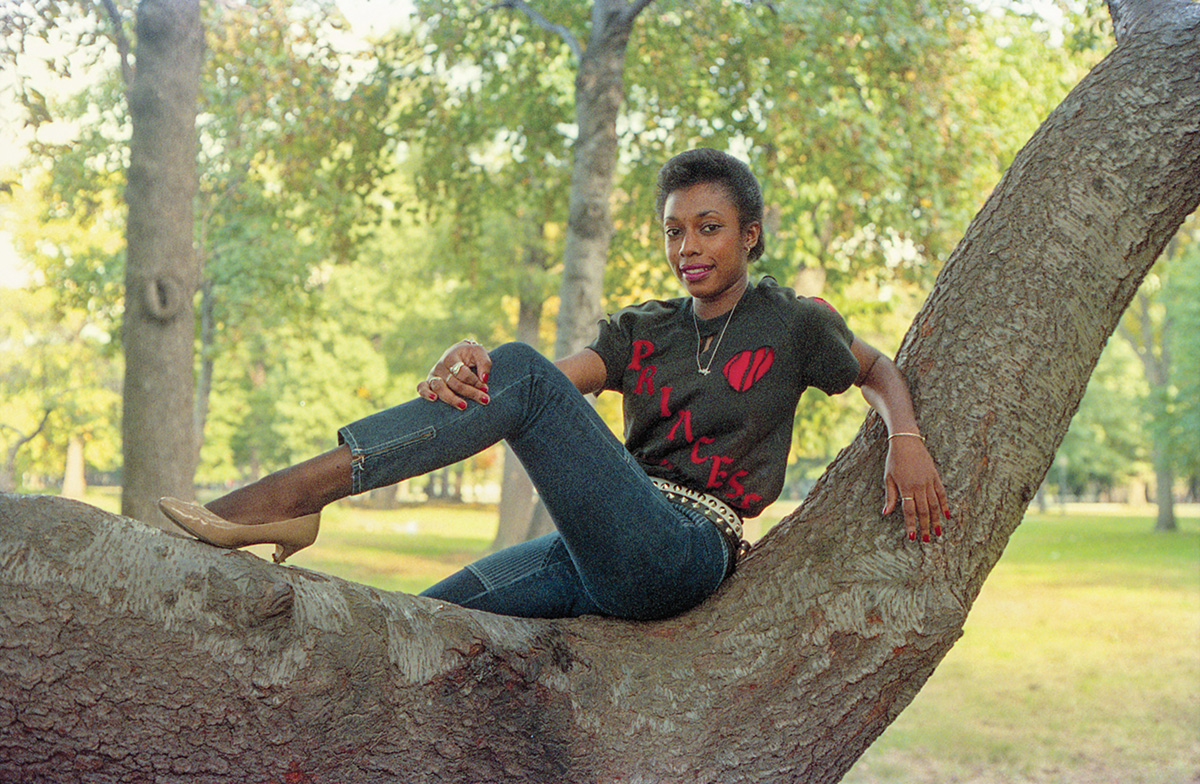
This is why he calls his work visual medicine. Not because the images are beautiful, though they are. But because they heal him. When he is conflicted about whether he is doing the right thing in life, he looks at his photographs and is reminded: I did that. I met people. I influenced people. I did my job. And the medicine extends outward. People write to him every day on social media. “I looked at your feed this morning, and it was the first thing I saw, and it made my heart smile.” In dark and challenging times, when social media feeds are flooded with negativity, his photographs function as a counternarrative. They are evidence that love exists, that beauty persists, that connection is possible. He posts with intention every day, planting seeds in the universe, reaching over 180,000 people around the world with a global language that requires no translation.
At the Leica store, he spoke about W.E.B. Du Bois’s American Negro exhibition in Paris in 1900, where Du Bois showcased images of African Americans that represented pride and dignity, and how that counternarrative may have influenced how Black soldiers were received in Europe during World War I. Shabazz understood early in his career that his photographs had to do the same work: show the fathers, show the love, show the families, show compassion, show empathy. He was being blasted with negative images throughout the 1960s, 70s, and 80s, the heroin epidemic, the war in Vietnam, the crack epidemic, the AIDS epidemic, mass incarceration. He needed to find love. And he did. And he has been showing it to us ever since.
© Jamel Shabazz, 2025
The Lesson
I asked Jamel the same question I asked him when we first met in 2016, sitting on Eastern Parkway by the chess tables. What has been the most important lesson you have learned so far through this experience, this journey we call life?
He said, “Life is that you have to live each day as if it is your last, because it is not promised. And live with purpose. Live with intention.” He said that for a long time, he questioned his path, debated whether he had made the right choice by going right when everyone else went left. But now, at 65, everything makes sense. The seeds he planted were not wasted. The people he met, whose significance he could not understand at the time, have come full circle. He was once a child who could not speak, who had a slight speech impediment and was afraid to open his mouth. Now he stands in front of audiences at the Leica Store and MoMA and galleries in Germany and speaks with the clarity of someone who has earned every word.
His life, he told me, has become like The Book of Eli. He has been on a path, carrying knowledge, extracting information, writing it down in his journals. And now his books are in libraries. His story is being preserved. His observations have become legacy. And his role at this stage is to put these books into the world and to have conversations like the one he had with me, imparting knowledge so that it does not die when he does.
© Jamel Shabazz, 2025
Love Is the Message
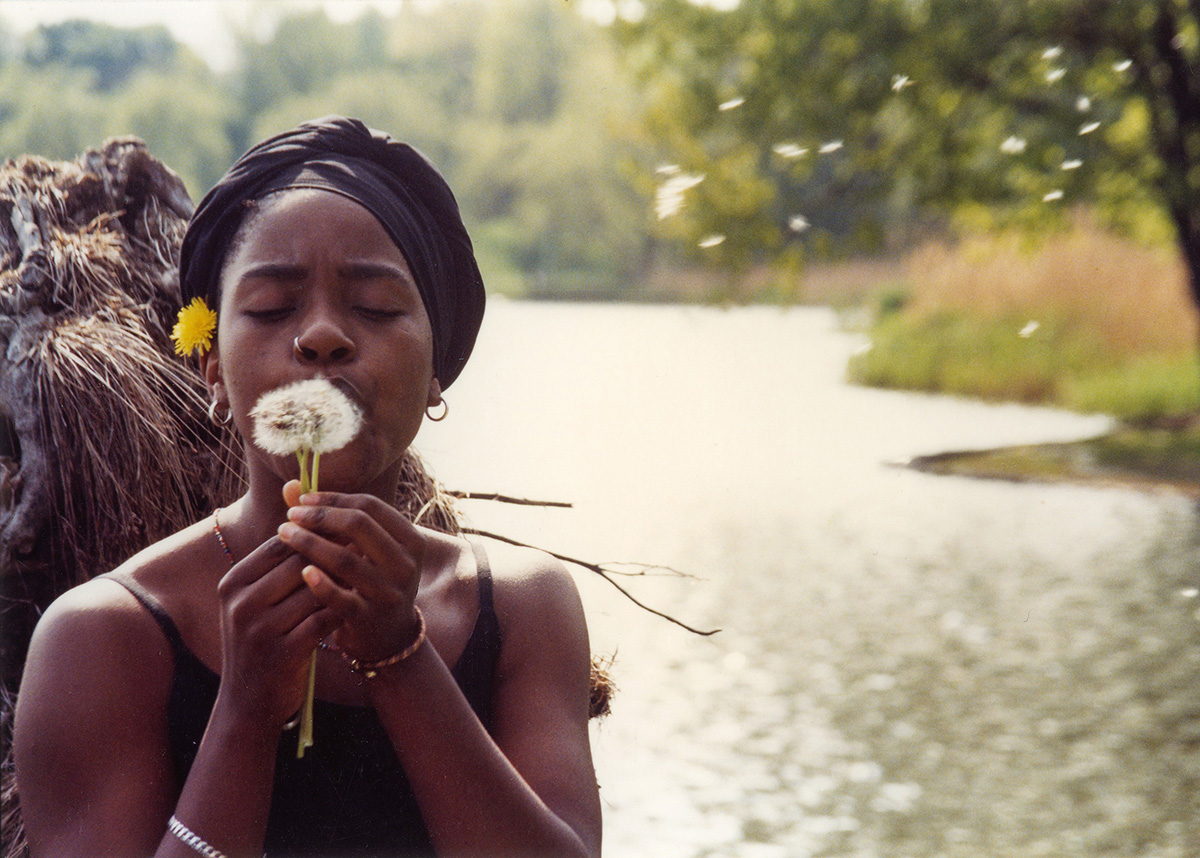
When I look at Prospect Park: Photographs of a Brooklyn Oasis, 1980 to 2025, I see all of this. I see the love of community. I see the love of drumming. I see the love of companionship and friendship and family. I see fathers and sons fishing together. I see partners holding each other in ways that need no direction from the photographer. I see siblings and sisterhood and brotherhood. I see people coming together with their cameras, with their bicycles, with their skateboards, with their dogs. I see people showing love for themselves by exercising, by walking, by simply breathing in a green space surrounded by concrete on all sides.
I see the love of someone who went to the park looking for it, because the alternative was letting the darkness win.
What Brooklyn readers will see in this book that an out-of-towner might miss is that Prospect Park is its own world. Brooklyn is its own world of culture and love and pride and integrity, and unlike the rest of the city, the changes that have occurred in Prospect Park over the decades are not that drastic. Yes, Deenps Bazile’s carvings have been removed, but they have been preserved in Shabazz’s photographs. The park remains an oasis, a real getaway from the concrete, and knowing that you are still in New York while standing inside of it is part of the gift. People of all walks of life are in there, and they are in there for harmonious reasons.
My hope is that anyone who reads this, or picks up the book, or encounters Shabazz’s work for the first time, walks away inspired to take their gifts, whatever they look like, however they need to show up, and utilize them to do good in the world at whatever frequency they are comfortable with. It can be covert or overt. It does not matter. The actions are needed and welcomed.
Love is the message. It always has been. Shabazz just had the discipline, the patience, and the faith to keep pressing the shutter until the rest of us could see it too.
Grab Your Copy
Prospect Park: Photographs of a Brooklyn Oasis, 1980 to 2025 by Jamel Shabazz, with contributions by Laylah Amatullah Barrayn, Richard E. Green, and Noelle Théard. © 2025 Prestel Verlag, Munich · London · New York. 176 pages. $45.